
Bologna FC's most defensible "net worth" figure comes straight from the club's own audited books. As of the financial year ended 30 June 2025, Bologna FC 1909 S.p.A. reported a shareholders' equity (patrimonio netto) of €34.4 million and a net debt position of €18.8 million. That €34.4m is the closest thing to a legally verified "net worth" you can point to today. It's a modest number on paper, but it tells only part of the story of what the club is actually worth in a broader market sense.
Bologna FC Net Worth: Club Value, Debt, Revenue Explained

Marcus Rendell
6 Jun 2026
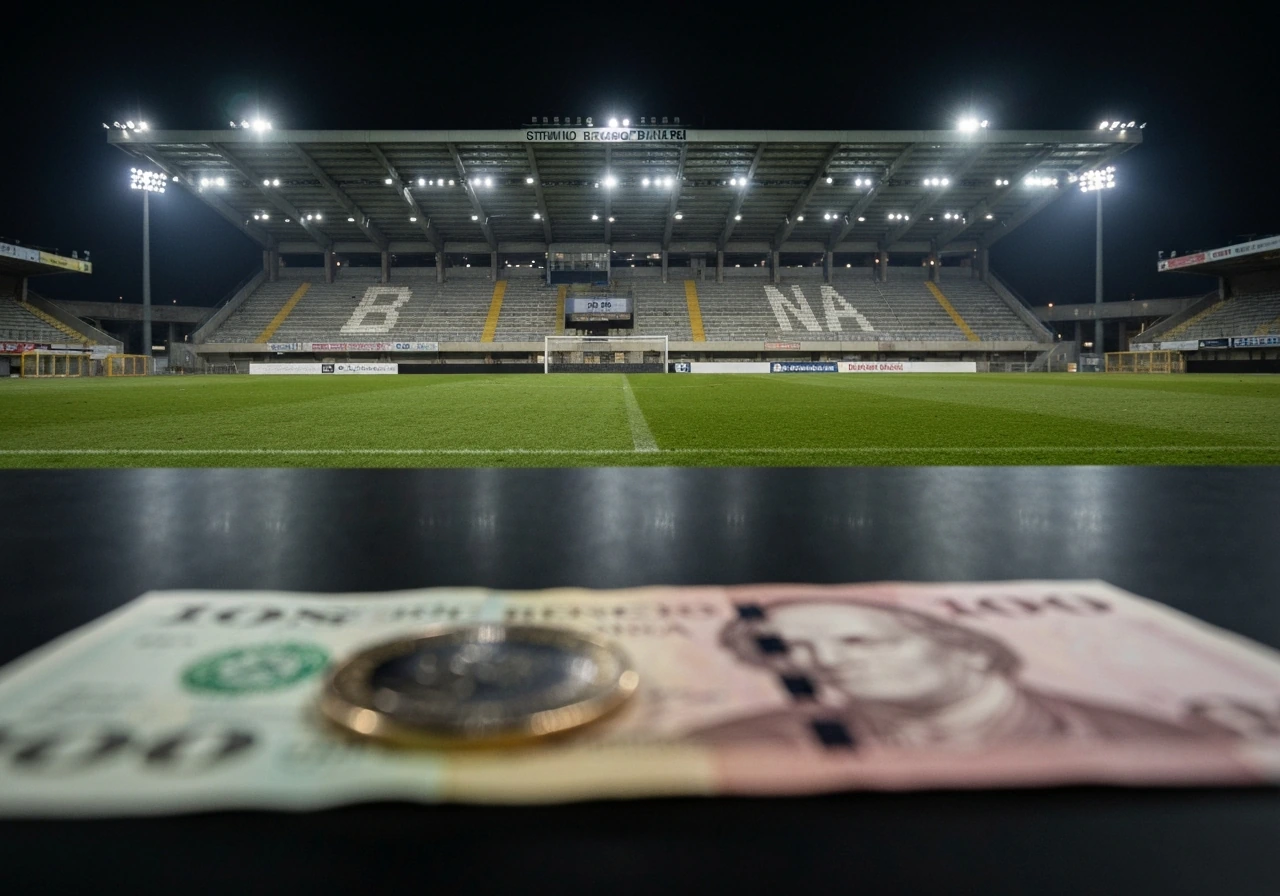
What "net worth" actually means for a football club
When people ask about a football club's net worth, they're usually reaching for one of three different things without realizing it. First, there's book equity, the accounting figure you get when you subtract total liabilities from total assets on the club's statutory balance sheet. Second, there's enterprise value or market valuation, which is what a buyer would actually pay to acquire the club and which factors in future revenue potential, brand strength, and competitive position. Third, some people are simply using Transfermarkt-style squad market values as a rough proxy. These three figures can look completely different for the same club at the same moment, so it's worth being clear about which one you're discussing.
For Bologna specifically, the statutory entity is Bologna Football Club 1909 S.p.A., an Italian joint-stock company that files audited annual accounts under Italian company law. That means there's a real, legally binding balance sheet with a genuine equity line. That's actually better than what you get for many mid-tier clubs around the world.
Bologna FC's full financial picture: revenue, costs, and debt

For FY 2024-25 (year ended 30 June 2025), Bologna reported total production and revenue of approximately €224 million. Total costs came in at €201.6 million, with staff costs accounting for around €84.1 million of that figure (including Coppa Italia performance bonuses). Player registration amortization, another major line item unique to football accounting, added €40.2 million to costs. The club closed the year with a positive result, a profit (utile) of around €14 million, which Gazzetta del Sport attributed in part to Champions League participation revenue and active player trading. Gazzetta.it also links the €14m “utile” (profit) to Champions League participation and the dynamics of player trading, in its analysis of the club’s accounts blank" rel="noopener noreferrer">Gazzetta.it links the €14m “utile” to Champions League participation and player trading.
On the balance sheet itself: shareholders' equity of €34.4 million and a net financial position that is negative by €18.8 million, meaning the club carries net debt slightly above its cash position. That net debt figure actually improved slightly from the previous year, when the FY 2023-24 audited accounts showed a negative net financial position of approximately €19.7 million.
The four main revenue streams driving the top line are matchday receipts, broadcasting and media rights (including Champions League distributions in recent cycles), commercial and sponsorship deals, and player trading (transfer fees received minus fees paid). Player trading is particularly volatile and can swing annual profits dramatically. Bologna's audited annual report for FY 2023-24 includes detailed transfer activity and player-rights disclosures, so you can trace exactly how squad transactions fed into the income statement that year.
Why different sources show very different numbers
If you've been Googling around, you've probably seen figures that look nothing like €34.4 million. That's because most of the numbers floating around online are not book equity figures. They're either squad market valuations or estimated enterprise/acquisition values, and they're calculated very differently.
Transfermarkt, for example, shows Bologna's total squad market value at approximately €292 million as of January 2026. That number represents the aggregated estimated transfer market value of every player on the squad, and it's a useful heuristic for comparing squad strength across clubs. But it is not the club's equity value. It doesn't account for wage obligations, transfer installment debts, operating costs, or the club's liabilities. Treating a Transfermarkt figure as a club's net worth is a category error.
Enterprise value estimates from sports finance analysts tend to use revenue multiples or earnings multiples, sometimes supplemented by models like the Markham Multivariate Model, which layers in performance metrics, brand indicators, and competitive position alongside financial statements. A club generating €224 million in annual revenue could theoretically carry an enterprise value of several hundred million euros depending on growth trajectory and league position, but any specific estimate from a third-party source is just that: an estimate based on assumptions you can't always verify.
| Valuation Type | Bologna FC Figure | What It Represents | Reliability |
|---|---|---|---|
| Book Equity (patrimonio netto) | €34.4 million (FY 2024-25) | Audited statutory net assets | High (legally filed) |
| Net Debt Position | Negative €18.8 million (FY 2024-25) | Net financial obligations vs cash | High (legally filed) |
| Transfermarkt Squad Value | ~€292 million (Jan 2026) | Aggregate player market values | Moderate (heuristic only) |
| Enterprise/Acquisition Value | Not publicly reported | What a buyer would pay | Low (estimates vary widely) |
Where to find reliable data right now

Bologna publishes its financial reporting through an official "Informazioni Finanziarie" page on the club website, including the Bilancio Consolidato al 30 Giugno 2025 and prior-year statements. Bologna FC 1909 publishes its financial reporting on an official “Informazioni Finanziarie” page, including the “Bilancio Consolidato al 30 Giugno 2025” and prior-year statements official "Informazioni Finanziarie" page. The FY 2023-24 full package (Fascicolo completo) is available as a PDF and is genuinely comprehensive, covering the income statement, balance sheet, notes, and corporate governance disclosures. This is where you want to go first.
- Bologna FC's official financial reporting page (Informazioni Finanziarie section of the club website): primary source for audited annual accounts
- The Bilancio Consolidato al 30 Giugno 2025 press release: summary figures including equity, net debt, revenues, and key cost lines
- The Fascicolo completo PDFs for prior years: full statutory annual reports with transfer disclosures and governance notes
- Italian company registry (Registro delle Imprese via CCIAA): independent verification of filed statutory accounts for Bologna Football Club 1909 S.p.A.
- Transfermarkt club profile: useful for squad market value context and historical trends, but clearly labeled as squad valuation, not club equity
- Gazzetta dello Sport, Calcio e Finanza, and Serie A financial journalism: secondary sourcing for context on how official figures are interpreted
When using any source, check whether you're looking at audited figures or estimated ones. Bologna's own published accounts are audited. Transfermarkt, analyst reports, and news summaries are not. Always note the closing date of the accounts you're reading, because Bologna's financial year ends 30 June, not 31 December.
Ownership and governance: how the Saputo connection shapes club value
Bologna has been owned by a Joey Saputo-led investor group since 2014, when Saputo's consortium completed the acquisition of the club. Joey Saputo, son of dairy billionaire Lino Saputo, also owns CF Montréal in MLS, and the Saputo Group has maintained a commercial relationship with Bologna that extends beyond pure ownership. In 2025, the Saputo brand was announced as Bologna's new main partner, deepening the commercial tie-in.
This matters for valuation because a stable, resourced ownership structure reduces financial distress risk, which affects how analysts and potential acquirers would price the club. It also means the club has had consistent reinvestment over more than a decade, which contributed to Bologna's Serie A consolidation and eventual Champions League qualification. Governance is handled through the S.p.A. corporate structure, with board and statutory auditor information disclosed in the annual report materials.
It's worth noting that the relationship between the Saputo family's broader wealth and Bologna's reported net worth is indirect. Sevilla FC net worth is often discussed using the same blend of book equity, net debt, and market valuation logic that applies to Bologna. When people ask about San Diego FC net worth, they are usually really asking about the same kind of club valuation question, just applied to a different team. The club's balance sheet reflects only the club entity's own finances, not the net worth of its owners. So the €34.4 million equity figure is purely the club's own position, independent of owner backing.
Recent events that move the valuation needle

Bologna's financial trajectory over the last few years is genuinely interesting. The club qualified for the UEFA Champions League for the first time in its history ahead of the 2024-25 season, which is a transformative event in terms of revenue. Champions League group stage participation brings in substantial UEFA distributions, boosted matchday revenues, and expanded commercial visibility. The FY 2024-25 profit of roughly €14 million is directly linked to that cycle.
Player trading has also been a structural profit driver. Bologna has developed a reputation for smart recruitment and profitable sales, and the detailed transfer disclosures in their annual reports confirm that incoming transfer fees are a meaningful income line. The €40.2 million in player amortization costs in FY 2024-25 shows the club is also investing in squad quality, not just selling assets.
The key risk factors that could reduce valuation going forward include failing to maintain a top-four Serie A position, losing key players without adequate reinvestment, or a rise in the net debt position. As of now, the net debt of €18.8 million is relatively modest compared to revenues, which is a healthy sign. Compare that to clubs like Napoli FC or Sevilla FC, which have operated with more complex debt structures and ownership transitions in recent years.
Putting the number in context: how Bologna compares to peers
A €34.4 million book equity figure sounds small, but it's actually fairly typical for Italian football clubs at Bologna's level. Book equity in football is routinely understated because it reflects historical cost accounting of player assets minus amortization, wage liabilities, and operating debts, not the forward-looking value of the club's revenue streams or brand. For context, Transfermarkt places Bologna's squad value at around €292 million, and the club generated €224 million in revenue in FY 2024-25. That revenue base, if the club sustains Champions League or European participation, would likely support an enterprise valuation well above book equity in any acquisition scenario.
Italian clubs with similar or slightly higher revenue profiles have traded at acquisition multiples of roughly 1 to 2 times annual revenue in recent deals, which would put a hypothetical market value for Bologna somewhere in the range of €200 to €450 million, depending on assumed growth and competitive trajectory. That's an estimate with wide bands, not a reported figure, and it's worth being transparent about that. No public transaction has occurred that would anchor a precise market value for Bologna today.
If you're comparing Bologna to other clubs covered on this site, the analytical framework is the same: start with the audited book equity, note the net debt, look at the revenue base and profitability trend, then consider what a market multiplier approach would suggest. Clubs like Monterrey FC or San Diego FC operate in very different commercial environments with different ownership economics, so direct comparisons require adjusting for league context, media rights distribution structures, and local market size.
Steps to update the Bologna FC net worth figure today
- Go to Bologna FC's official website and find the Informazioni Finanziarie section. Confirm you're looking at the most recently approved balance sheet (as of writing, the Bilancio Consolidato al 30 Giugno 2025 is the latest).
- Note the "patrimonio netto" (shareholders' equity) figure and the "posizione finanziaria netta" (net financial position). These two numbers give you the audited book position.
- Check the revenue total (€224 million for FY 2024-25) and the profit/loss for the year. A positive result improves equity; a loss erodes it.
- Cross-reference with the Italian company registry (Registro delle Imprese) for independently filed versions of the same accounts if you want verification outside the club's own communications.
- Check Transfermarkt for the current squad market value. Note the date of the snapshot and remember this is squad value, not club equity.
- Scan Calcio e Finanza or Gazzetta dello Sport for any analyst commentary on the approved accounts, which often surface context the raw numbers don't explain.
- If a new season has started and you're between annual filings, note that official FY figures won't update until after 30 June and the subsequent board approval (typically in the autumn).
- Combine the book equity, net debt, revenue run rate, and any recent transfer activity to form a rounded picture. State clearly which elements are audited and which are estimated.
FAQ
Is Bologna FC net worth the same as the club’s Transfermarkt squad value (about €292 million)?
No. The Transfermarkt number is an estimate of players’ market values and it is not a balance-sheet figure. It ignores club liabilities, installment transfer debt, wage obligations, and the accounting treatment of player amortization, so it should not be treated as the club’s net worth.
What exactly does Bologna’s €34.4 million figure represent, and can it change quickly?
It is shareholders’ equity (book equity) for the audited statutory entity Bologna Football Club 1909 S.p.A., for the year ended 30 June 2025. It can move year to year due to profits or losses, transfer gains or losses, changes in cash, and how player contracts are amortized, even if the sporting results look similar.
How should I interpret “net debt of €18.8 million” if the club is profitable?
Profit does not automatically mean net debt improves. Net debt reflects cash and financial liabilities netted together, so the club can report a positive operating result while still having higher financing obligations or lower cash after reinvestment and transfer activity.
Why are Italian football clubs often shown with low “net worth” on paper?
Book equity is usually understated because player registrations are capitalized and then amortized over contract life. That historical cost and amortization framework does not capture the forward-looking economic value of a squad, media rights upside, or brand, so market-based valuations can be far higher.
If Bologna sells players, does that automatically increase net worth?
Not automatically. A sale can increase profit in the short term, but it can also reduce squad value and revenue if replacements are not secured. Whether equity rises depends on the net effect after incoming amortization changes, wage commitments for new players, and any changes in cash after paying installment transfer fees.
What’s the difference between Bologna’s “club entity” net worth and the owner’s wealth?
The accounts reflect only Bologna Football Club 1909 S.p.A.’s balance sheet, not the Saputo group’s overall wealth. Any links between owner backing and club financing are indirect, for example via sponsorship terms or potential shareholder support, and they do not equate to adding the owner’s assets to the club’s net worth.
Why do some sites show numbers that look wildly different from €34.4 million?
Most alternate figures are either squad-value heuristics or enterprise value estimates. Enterprise value is a model output based on assumptions like revenue multiples, growth, and risk, so two sources can diverge substantially if they use different multipliers or probability-weighted performance scenarios.
How can I tell whether a “net worth” figure I see online is reliable?
Check whether it is explicitly tied to audited financial statements and note the reporting period end date (Bologna uses 30 June). If the figure is described as an estimate, valuation model output, or based on player markets, treat it as non-audited and methodology-dependent.
Does Champions League participation directly affect Bologna’s net worth or just the profit and revenue?
It primarily boosts revenue and profitability through UEFA distributions and related matchday and commercial effects. Over time, those profits can improve equity, but the immediate impact is on income statement lines, and the net worth change also depends on how much cash is retained versus reinvested or used to reduce financial liabilities.
If I want a “market value” range for Bologna, what inputs should I use to avoid bad assumptions?
Use audited revenue and profitability trends, then apply a conservative enterprise-to-revenue multiple range and adjust for net debt (negative or positive) to estimate equity implications. Also include a scenario for whether Champions League performance is repeated, because the revenue base is not stable every year.
Next Articles
Sevilla FC Net Worth: How to Estimate Club Valuation
Learn how to estimate Sevilla FC valuation and financial position using source-based revenue, costs, debt, assets, and c

Napoli FC Net Worth Explained: Valuation, Debt, Owners
Napoli FC net worth breakdown: valuation vs equity, revenue, debt, wages, amortization, owners, and Serie A peer compari

San Diego FC Net Worth: Valuation Estimates and How to Check
Estimate San Diego FC net worth with valuation methods, credible data sources, and MLS comparables plus update steps.