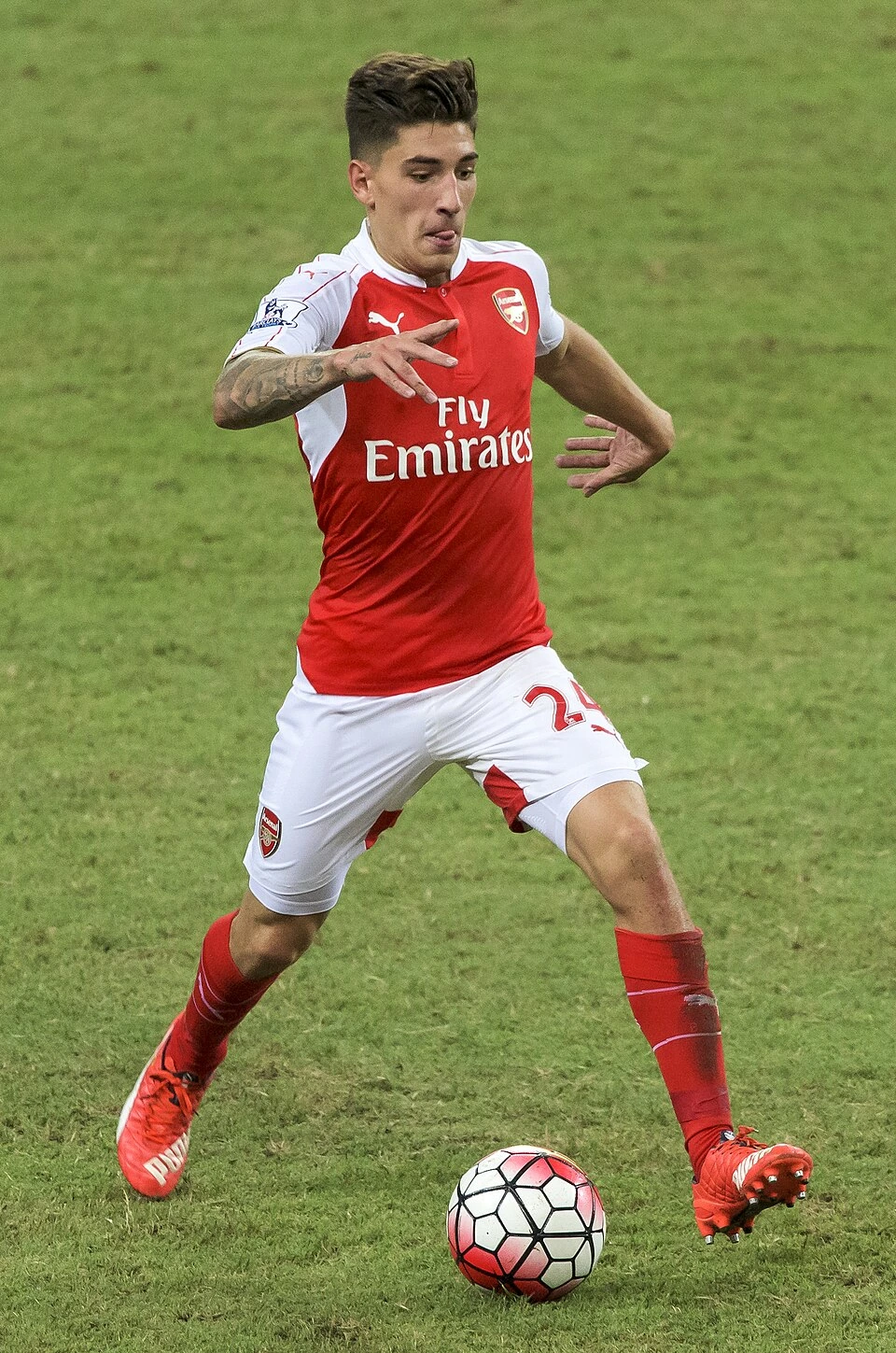
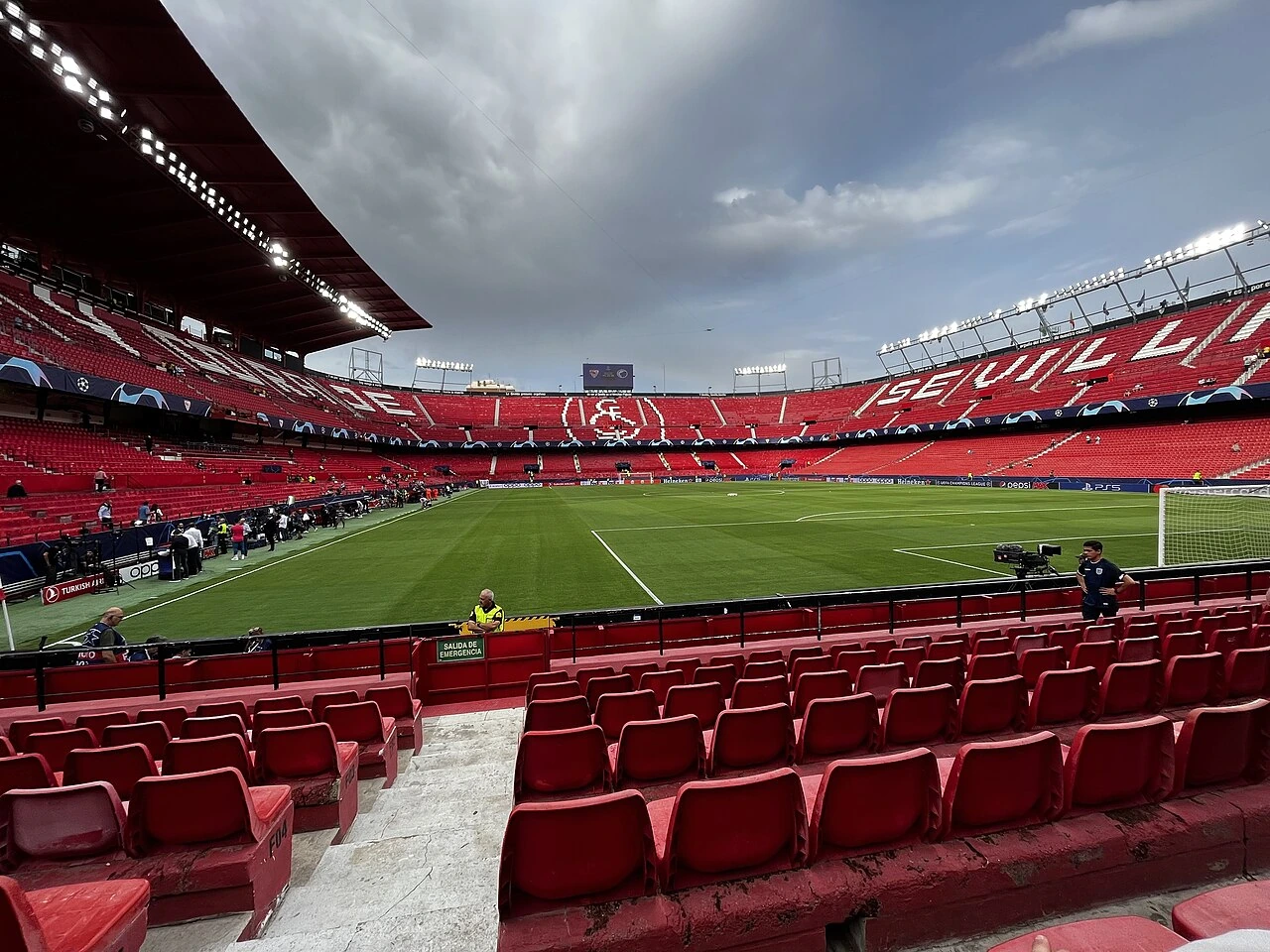
What we can do is reconstruct a reasonable floor and ceiling from confirmed contract data, reported wages, verified endorsement deals, and known investments, then flag what's still uncertain. The figure above reflects that approach: take confirmed peak earnings from his Arsenal years, adjust downward for taxes, spending, and the lower wages he's received since 2022, then factor in business ventures and equity stakes.
The honest answer is that it lands somewhere in that $15M–$25M band, and anyone quoting a single clean number is compressing real uncertainty into false precision.
Career income overview: salary, bonuses, and endorsements
Bellerín's income story has three distinct chapters: his apprentice years at Arsenal (2011–2016), his peak earning period at the club (2016–2022), and a noticeably leaner post-Arsenal phase from 2022 onward. The backbone of his wealth came squarely from the middle chapter. In November 2016, The Guardian and ESPN both reported that Bellerín signed a new long-term Arsenal contract, with AS reporting the salary at roughly £100,000 per week, equivalent to around €6. 61 million per year.
Spotrac's contract database records his Arsenal deal as a five-year arrangement worth approximately $28. 6 million with an average annual value of $5. 72 million. Even accounting for different reporting methods, those figures point to the same ballpark: Bellerín was earning north of $5 million per year at his Arsenal peak.
On top of base salary, top-flight Premier League players typically receive appearance fees, performance bonuses, and loyalty clauses, though none of Bellerín's specific bonus structures have been made public. Endorsement income adds a meaningful but harder-to-quantify layer. Bellerín has been one of the more commercially active players of his generation, parlaying his fashion-forward public image into brand partnerships rather than just traditional sportswear deals. That non-salary income stream is real, but the exact figures require careful sourcing, which the next section covers.
Club-by-club earnings timeline

Bellerín joined Arsenal's academy in 2011, moved to the first team around 2013–2014, and started earning first-team wages from roughly that point, though his salaries were modest at the early stage. The meaningful earnings clock really started with his senior breakthrough in the 2014–2015 season. His 2016 contract extension locked in the premium wages reported above through his remaining Arsenal tenure.
| Club / Period | Reported Wage (approx.) | Notes |
|---|
| Arsenal (2014–2016) | ~£30,000–£50,000/week estimated | Pre-extension squad wages; not publicly disclosed |
| Arsenal (2016–2022) | £100,000/week (€6.6M/year) | Reported by AS; cross-referenced with Spotrac ($5.72M AAV) |
| Real Betis loan (2021–2022) | Partial season; wages unclear | Loan terms generally differ from parent-club salary |
| Barcelona (Sept 2022 onward) | €500,000/year (self-reported) | Bellerín told Ara newspaper this figure in January 2023 |
| Real Betis (2023–present) | €60,000/week (~€3.12M/year) | FBref 2024–25 La Liga wages table; flagged as estimation |
The Barcelona figure is the most unusual data point in the table and worth dwelling on. In January 2023, Bellerín told the Catalan newspaper Ara that his annual salary at Barcelona was €500,000 and used that as context for his public argument that footballers should earn less and pay more tax. That is a strikingly low number for a player with his career profile, and it reflects a deliberate choice on his part, likely influenced by Barcelona's financial constraints at the time and his own stated values around pay equity. The Betis figures from FBref, by contrast, show a much higher weekly wage for the 2024–25 season, though FBref explicitly flags some wage entries as unverified estimations, so those numbers should be treated as informed approximations rather than confirmed disclosures.
Bellerín's brand portfolio is more diverse than most footballers of his era, and several deals are verifiable through primary corporate sources. In March 2021, H&M issued a press release via PRNewswire confirming a collaboration called 'Edition by Héctor Bellerín,' available on hm.com and in selected stores. That partnership is confirmed. EA Sports appointed him creative director for FIFA Volta, a role reported by multiple outlets including Outpump, which positions him as a brand ambassador and creative partner rather than just an ad-placement athlete. A capsule collection with Golf Wang (Tyler, the Creator's brand) was announced around the 2022 World Cup cycle and reported by Goal.com, naming his business partner Horacio González-Alemán in the same context.
His most sustained commercial venture is Gospel Estudios, a slow-fashion clothing brand he has been publicly associated with since at least 2024. Gospel Estudios' own website carries a profile for Bellerín, and What Magazine separately reported the launch, giving you two independent sources for the same project. Gospel Estudios’ official website hosts a profile page for Héctor Bellerín, which is primary evidence of his association with the brand.
None of these deals come with disclosed financial terms, which is standard practice. To estimate the income contribution, you can benchmark against comparable athlete-fashion collaborations: H&M co-branded collections with athletes in this tier typically involve six-figure fees plus royalty structures, but the exact amount for Bellerín is not public.
The honest framing is that endorsements and brand work add meaningfully to his income, but not at the level of, say, a top-five global football name with a Nike or Adidas global contract.
For comparison, players with similarly active commercial profiles but different career trajectories illustrate how brand income scales relative to peak wages. Pierre-Emerick Aubameyang's net worth is a useful reference point here: Aubameyang played alongside Bellerín at Arsenal during overlapping peak-salary years but commanded a higher base salary and a different sponsorship tier, which shows how even teammates in the same era can land in very different wealth bands.
How to verify brand deals yourself

- Search the brand's own press room or newswire listings (PRNewswire, Business Wire) for the player's name; corporate releases are more reliable than third-party gossip sites.
- Check whether the brand has filed any regulatory disclosures mentioning the partnership (especially relevant for publicly listed companies like H&M).
- Use FBref's wage tables as a cross-check on salary, but note which entries carry the 'unverified estimation' label.
- Treat self-reported figures (like Bellerín's €500,000 Barcelona salary stated to Ara) as high-confidence anchors since they come directly from the player.
- Discount single-figure net worth estimates on aggregator sites unless they cite a named primary source.
Assets, lifestyle, and what actually moves the net worth needle
The most concrete investment on record is his equity stake in Forest Green Rovers, the eco-friendly English football club. Both ESPN and The Washington Post reported on September 8, 2020 that Bellerín became the second-largest shareholder in the club. This is not a jersey sponsorship or a nominal ambassador role; it is a real ownership stake. The financial value of that stake depends entirely on Forest Green Rovers' current valuation, which fluctuates with the club's league status and commercial fortunes. It is a meaningful but illiquid asset.
On the lifestyle side, a 2018 CNBC interview in which Bellerín spoke with Wealthsimple about his first big paycheck is one of the few on-record glimpses into his spending patterns. He mentioned carrying a wash bag stocked with luxury brands as an early splurge, which is consistent with his known interest in fashion. Whether that translated into sustained high spending or disciplined saving is not publicly documented. What is documented is a clear interest in values-driven investing: the Forest Green Rovers stake and the Gospel Estudios venture both fit a pattern of putting money into causes aligned with his public identity around sustainability and ethics.
Taxes are the single largest unaccounted variable in any athlete net worth calculation. Bellerín has earned income in the UK (top income tax rate 45%), Spain (progressive rates up to 47%, though football players registered under certain regimes pay differently), and potentially other jurisdictions depending on image rights structuring. A player earning £100,000 per week in the UK could lose 45p on the pound above the higher-rate threshold. That means gross career earnings of, say, $30 million over the Arsenal peak years could translate into significantly less than $20 million after tax and agent fees (typically 3–5% of contract value). This is why reconstructing net worth purely from headline salary figures overstates the actual number.
For a sense of how assets and career timelines interact across generations at Arsenal, Tomáš Rosický's net worth profile offers an instructive contrast: a player who spent a similar spell at the club but in an earlier, lower-salary era, illustrating how dramatically the Premier League wage market shifted in the years between their respective peaks.
How these numbers are calculated: methodology and what's confirmed vs. estimated
There is no public database of Héctor Bellerín's bank account. Every net worth figure you see, including the range in this article, is a reconstruction. The methodology used here works like this: start with the most credible salary anchors (Spotrac's $28.6M Arsenal contract value, the AS-reported £100,000/week figure, FBref's €60,000/week Betis entry, and Bellerín's own €500,000/year Barcelona statement), calculate approximate gross career earnings across each stint, apply conservative tax and fee deductions, add estimated endorsement income based on verified deals with named partners, and include the Forest Green Rovers stake at an uncertain but non-trivial valuation. The result is a range, not a point estimate, because the inputs themselves carry uncertainty.
Sites like CelebrityNetWorth publish single figures and update them without always citing named sources, which is why those numbers sometimes look oddly precise. Spotrac and FBref are more useful starting points because they show their methodology and, in FBref's case, explicitly flag which wage entries are unverified estimations. SalaryLeakes and SalarySport provide cross-check data for career earnings tables, but they are secondary databases rather than primary disclosures. The most reliable figures in Bellerín's case are: the Spotrac contract total for Arsenal, the self-reported Barcelona salary, and the FBref Betis wage (with the caveat that it is an estimation). Everything else should be treated as informed inference.
Comparing methodologies across similar profiles is genuinely useful. Serge Gnabry's net worth breakdown uses a similar reconstruction approach for a player with comparable vintage and a mix of club contracts and endorsement income, which can help you calibrate what reasonable assumptions look like for a European footballer of this generation.
Net worth vs. annual earnings: how Bellerín's wealth has grown and where it goes next
There is a common confusion between what a player earns in a given year and what they are actually worth. Net worth is a snapshot of assets minus liabilities at a point in time. Annual earnings are one input to that snapshot, not the snapshot itself. At Bellerín's Arsenal peak (roughly 2017–2021), his annual gross earnings likely exceeded $5–6 million per year. But the post-tax, post-fee net flowing into his personal wealth was materially lower, and lifestyle spending, property costs, and investment outlays all pulled in different directions.
Since 2022, his footballing salary has dropped substantially: from the equivalent of €6+ million per year at Arsenal to €500,000 at Barcelona by his own account. The Betis wage data suggests a recovery in footballing income for 2024–25, with FBref's estimation placing him at €3.12 million annually. But the trajectory is clear: the peak earning window has passed, and future net worth growth will depend more on his business ventures, equity stakes, and investment returns than on football wages.
The most likely scenario for the next few years is gradual stabilization rather than dramatic growth or decline. If the Forest Green Rovers stake appreciates, Gospel Estudios gains commercial traction, and he continues attracting brand partnerships, the net worth range could push toward the upper end of the $15M–$25M estimate or beyond. If footballing income drops further after his Betis tenure and business ventures underperform, the floor is more relevant. Neither extreme is speculative: both are plausible given the available evidence.
For broader context on how retired or semi-active players from the same European football generation have managed wealth transitions, Olivier Giroud's net worth profile is worth reading alongside this one. Giroud had a significant Arsenal overlap with Bellerín and has since moved into MLS, a career arc that shows how post-European-peak earnings can extend a player's income timeline in different ways.
If you want to keep tracking Bellerín's financial picture over time, the most useful sources are: FBref's wage tables (updated each season, with transparency about what is estimated), Spotrac for contract structure details, and player interviews or club financial filings for any confirmed salary disclosures. Corporate press releases on PRNewswire and similar wires are the gold standard for endorsement confirmation. Be skeptical of any site that publishes a single net worth number without naming a source or explaining its methodology. The range-based approach used here is less satisfying than a clean number, but it is more honest about what the public record actually supports. A contemporary Reddit discussion (Jan. 31, 2023) about Bellerín’s transfer to Sporting CP captures public reactions and the uncertainty around contract terms and wages, which can be useful anecdotal context (see: https://www.reddit.com/r/Barca/comments/10qc57e) [\[r/Barca\] Agreement for the transfer of Héctor Bellerín to Sporting Clube de Portugal](https://www.reddit.com/r/Barca/comments/10qc57e).