
There is no single, officially published "net worth" figure for Brazil's national football team. What most people are really asking about is the overall financial value of the Seleção as an asset: its brand, its commercial deals, its competition earnings, and the collective wealth of its players. When you break those pieces apart and look at each one with real data, you get a practical picture of how much economic power Brazil's men's national team actually represents in 2026.
Brazil National Football Team Net Worth: How It Is Estimated

Marcus Rendell
28 May 2026

What "Brazil national football team net worth" usually means

When someone searches this phrase, they are almost never looking for a balance sheet. They want to know how valuable Brazil is as a football property: how much money flows through the program, how big the brand is, and roughly how that stacks up against other national teams or clubs. That is a legitimate question, but it requires a different framework than the one you would use for a company or an individual player.
A national federation like the Confederação Brasileira de Futebol (CBF) does publish financial accounts, and those include assets and liabilities in the accounting sense. But the CBF is the governing body, not a commercial entity in the way a club like FC Porto or a business corporation is. That contrast helps explain why a simple FC Porto net worth style figure does not map cleanly onto the Brazil national team program a club like FC Porto.
The national team itself is a program run within the CBF, not a separately incorporated entity with its own equity value. So "net worth" in the traditional sense does not cleanly apply. What analysts, journalists, and finance-focused sites like this one can do instead is estimate value using measurable financial proxies.
How net worth is estimated for national teams (not individuals)
The most credible approach, borrowed from how firms like Deloitte frame football finance in their Annual Review of Football Finance, is to look at the revenue and commercial-rights drivers that generate forecastable cashflows. You are not trying to find accounting equity. You are trying to understand the present value of what the asset earns and can earn. For a national team, that means looking at three main buckets: competition-based income (FIFA distributions, tournament prizes), commercial income (sponsorships, kit deals, broadcast rights where applicable), and reputational/brand value (harder to quantify, but it directly multiplies what sponsors will pay).
It is also worth separating two things that get conflated constantly: the market value of players (as tracked by platforms like Transfermarkt) and the financial value of the national team program. Transfermarkt's market value is an estimate tied to transfer dynamics and club performance. It is a useful indicator of squad quality, but a $1 billion combined squad market value does not mean the national team "is worth" $1 billion in any financial sense. The CBF cannot sell the players; it does not own their contracts. The squad's collective Transfermarkt value is context, not an asset on any balance sheet.
Revenue sources for Brazil's men's national team

Brazil's national team generates revenue through several distinct channels, and understanding each one gives you the clearest picture of the program's financial scale.
- FIFA World Cup distributions: FIFA distributed over $570 million to participating associations and their clubs at the 2022 World Cup in Qatar. Brazil, as a participant, received a share of that pool both as an association and through club compensation payments for releasing players. For the 2026 World Cup (hosted across the USA, Canada, and Mexico), FIFA's total prize pot is set at $1 billion, making this the single largest income event in any World Cup cycle.
- CONMEBOL competition earnings: Brazil participates in the Copa América, World Cup qualifying, and the Finalissima concept. CONMEBOL distributes prize money across its competitions, though these figures are smaller than FIFA World Cup distributions.
- Friendly and commercial match fees: High-profile friendlies, particularly against European nations or in the United States, generate appearance fees and gate-revenue splits that can reach into the millions per match for a team with Brazil's global draw.
- CBF commercial and broadcast rights: The CBF negotiates broadcast deals for national team games domestically and contributes to the global rights packages FIFA sells internationally.
- Sponsorship and kit revenue: Dealt with in more detail below, but commercial partnerships are a major and growing share of the CBF's total income.
Major brand and commercial value: sponsors, kit deals, and FIFA earnings
Brazil's yellow jersey is one of the most recognizable and commercially valuable in world football, and that brand recognition translates directly into deal size. Nike has held the Brazil kit deal for decades, and the partnership is widely reported as one of the most valuable national team kit contracts in the world, with estimates in the range of $100 million or more per year across various reports, though the precise figures in the most recent contract are not publicly disclosed by either Nike or the CBF. For comparison, the England-Nike deal signed in 2023 is reported at around $75 million annually, which gives you a useful benchmark for where Brazil's deal likely sits.
Beyond the kit, the CBF has a portfolio of official sponsors spanning banking, telecommunications, food and beverage, and automotive sectors. Brazilian companies pay a premium to associate with the national team, particularly in a World Cup year. The CBF's annual revenue from commercial activities has been reported in the range of several hundred million Brazilian reais per year in non-World Cup years, scaling up significantly in World Cup cycles when performance and visibility peak.
FIFA's 2026 World Cup prize fund of $1 billion is the most immediately impactful external revenue event. How far Brazil advances in the tournament in the summer of 2026 will directly determine their share. At the 2022 World Cup, the winner (Argentina) received $42 million from FIFA's prize fund, while quarter-finalists received around $25 million. With the expanded 48-team format and doubled prize pool in 2026, those figures will be meaningfully higher. A deep run to the final or a title would put Brazil's prize money alone in the $50 to $100 million range from a single tournament.
Player and staff wealth context: the stars' earnings are separate from the team's value
This is where most readers get turned around. The individual net worth of Brazil's players is genuinely staggering in aggregate, but it belongs to the players, not to the national team program. Vinicius Jr., arguably Brazil's most prominent active star as of 2026, earns a reported salary at Real Madrid of around $25 million per year and has built an endorsement portfolio (Nike, EA Sports, and others) estimated to generate tens of millions more annually. His personal net worth is tracked and profiled separately on this site. The same applies to Rodrygo, Gabriel Martinelli, and Endrick, all of whom are at elite European clubs on major contracts.
Historically, Brazil has produced some of football's wealthiest players. Ronaldo (R9) and Ronaldinho both built post-career business empires alongside their playing earnings. Garrincha, by contrast, represents a cautionary financial story from an earlier era, a player of comparable on-field greatness who died with very little personal wealth. If you are specifically chasing Garrincha net worth figures, note that his personal wealth story is separate from the financial value of Brazil's national team program. These individual stories are part of this site's core coverage, and profiles like those of Fernandinho (a Brazil regular across multiple World Cup cycles) give you detailed career-earnings context that complements but does not define the national team's financial value.
The coaching and technical staff add another layer. Brazil's head coach commands a salary that reflects the global profile of the job, with compensation packages for top national team managers typically ranging from $3 million to $10 million annually in recent cycles. Again, that is a cost to the CBF, not a component of the team's "worth" in the outward-facing sense.
| Financial Component | Who Controls It | Relevance to "Team Net Worth" |
|---|---|---|
| FIFA/CONMEBOL prize money | CBF receives directly | Core revenue input for any valuation |
| Kit and sponsorship deals | CBF negotiates | Major commercial value driver |
| Player salaries and endorsements | Individual players and their clubs | Context only, not a CBF asset |
| Squad Transfermarkt market value | Estimate based on transfer market | Indicator of squad quality, not financial equity |
| CBF balance sheet (assets/liabilities) | CBF as a legal entity | Closest thing to a formal "net worth" but rarely published in full detail |
Recent performance impact and financial trends to watch

Brazil's early exit at the 2022 World Cup (quarter-finals, knocked out by Croatia on penalties) had a measurable dampening effect on the immediate post-tournament commercial cycle. Sponsor visibility is tied to deep tournament runs, and a team that exits before the semi-finals loses several weeks of global media coverage compared to a finalist. That said, Brazil's brand is resilient enough that it does not collapse on the back of a single bad result the way a smaller football market would.
For 2026, the financial stakes are the highest they have ever been. The expanded 48-team World Cup on North American soil offers an enormous commercial platform. Brazil has a massive diaspora audience in the United States, which makes every Brazil game at this tournament exceptionally valuable from a broadcast and sponsor activation standpoint. If the Seleção reaches the knockout rounds consistently and makes a deep run, the downstream effects on the CBF's next commercial negotiating cycle (kit deals, sponsors, broadcast rights for qualifiers) would be significant.
The other trend worth monitoring is the growing commercialization of national team intellectual property. Leagues and federations globally are increasingly licensing digital content, NFTs (though that market has cooled), and streaming rights in ways that create new revenue streams. The CBF has been slower than some European federations to fully monetize these channels, which means there is upside that is not yet reflected in current revenue estimates.
For comparison, Portugal's national team offers a useful parallel: a smaller football market but one amplified globally by the presence of Cristiano Ronaldo (whose business interests, including the Pestana CR7 hotel brand, have driven his personal brand far beyond football). That same wider brand effect is why many readers also search for Pestana CR7 net worth Pestana CR7 hotel brand.
If you want the same net-worth angle for Portugal, you can use the same revenue and sponsorship drivers to estimate how valuable the program is Portugal's national team. Brazil's equivalent amplification comes from the collective star power of its squad rather than a single individual, which creates a different but comparably large commercial footprint. Both national teams show how player fame and team performance interact with federation revenues in ways that blur the line between individual and institutional wealth.
How to research this further on this site
If you came here wanting a concrete number, the honest answer is: there is no verified, publicly disclosed single figure for Brazil's national team net worth. If you want a player-level comparison instead of institutional financial proxies, you can also look up Falcão net worth and how star earnings differ from the national team’s commercial value falcao net worth. What you can do is build a reasonable picture using confirmed and estimated inputs. The CBF's publicly available annual reports (when released) give you the closest thing to an official financial snapshot. FIFA's published prize distributions give you hard competition income. The Nike deal and sponsor portfolios give you commercial scale, even if exact contract values are not public.
For the player side of the equation, this site profiles current and retired Brazil internationals with career earnings, contract histories, and net worth estimates based on available data. Looking up profiles for current squad members like Vinicius Jr. , Rodrygo, and Endrick, or retired legends like Ronaldo, Ronaldinho, and Garrincha, will give you a sense of the individual wealth that surrounds the national team without conflating it with the team's own financial value.
Coaches and federation executives are also covered where public compensation data exists. Treat individual net worth figures as estimates unless a specific figure has been publicly confirmed, and the same rule applies to any headline "team net worth" number you see elsewhere: ask what inputs went into it and whether they are sourced or speculative.
FAQ
If there is no official “net worth” for Brazil’s national team, what’s the closest substitute number I can use?
Use an estimated enterprise-style value based on annual revenue proxies rather than accounting equity. In practice, you can total (1) FIFA competition distributions expected from Brazil’s 2026 run, (2) recurring commercial income like kit and sponsor streams, then apply a simple present-value multiple over a few years to approximate “economic value,” not balance-sheet net worth.
Do player salaries or transfer-market values count toward the national team’s financial value?
No, not in the way most “net worth” calculators imply. Transfer-market value reflects what the players could command in the club transfer market, and player salary belongs to clubs, not the federation. The national team’s value comes from federation-controlled cash flows like FIFA distributions, licensing, and sponsorships.
How much does Brazil’s performance at the 2026 World Cup actually change the estimated value?
It matters most through incremental prize money and the visibility premium for sponsors. If Brazil reaches later knockout rounds, you should adjust both (a) the expected FIFA prize share and (b) near-term sponsor renewal strength, because brands typically pay more when a team is repeatedly in global media during the tournament window.
Why do some websites claim a single “Brazil national team net worth” number anyway?
Those figures usually blend unrelated concepts, such as adding player market values, mixing club-related earnings, or converting uncertain sponsor contract values into one headline “equity” number. A quick check is whether they cite identifiable revenue inputs (kit, sponsors, FIFA distributions) or whether they mainly rely on speculative totals.
What exactly is the CBF “worth” compared to the national team program?
The CBF is the governing body, it files its own financial accounts, but the national team is a program within that structure. So you should treat CBF finances as the wider context, while the national team’s “value” estimate should focus on federation revenues that are specifically tied to the Seleção brand and international window earnings.
Does the coaching staff cost reduce the national team’s value estimates?
Yes, if you’re estimating economic value as a profit-like metric, you should subtract estimated operating costs that are directly tied to the program (coach and technical staff compensation, team operations, travel, and preparation budgets). But if you are only estimating gross “asset value” using revenue proxies, many articles do not model costs, which can inflate the implied number.
How should I treat Brazil kit and sponsor deal figures when the exact contract amounts aren’t public?
Use ranges and validate with cross-benchmarks. The practical approach is to estimate kit and headline sponsorships using comparable reported national-team contracts (same era, similar market reach), then stress-test the result by adjusting the kit number up or down based on whether Brazil’s tournament performance was above or below expectations.
Do qualifiers (World Cup qualification matches) create a separate value stream from the finals?
Often yes. Qualification windows can influence broadcaster exposure, sponsor retention, and downstream deal negotiations. Even if prize money concentrates at the finals, qualification performance can affect commercial momentum and the next negotiation cycle for broadcast and sponsor renewals.
What about digital licensing, streaming, and other IP monetization, is it already reflected in estimates?
Not fully in many “team net worth” posts. Digital rights, social content licensing, and streaming partnerships can add incremental revenue with lag effects, so a conservative estimate may undercount them. If your goal is a more realistic 2026 economic value, consider adding a small upside component for digital and media rights growth.
If I want to compare Brazil to another national team, what’s the fair comparison method?
Compare using similar revenue drivers, not raw “net worth” headlines. A fair method is to build both estimates from (1) FIFA distributions based on expected tournament advancement, (2) kit and sponsor monetization strength, and (3) brand reach proxies like audience size and global visibility, then apply the same valuation logic to each team.
Are individual player net worth numbers relevant, and where do they mislead?
They’re relevant only as context for the star power around the program, not as the program’s own wealth. They mislead when someone treats player wealth as if the federation owns those earnings. A better use is to see how star endorsements and visibility can indirectly lift sponsorship appetite for the national team brand.
How can I sanity-check whether an estimated “Brazil national team net worth” number is reasonable?
Do a reverse check. Convert the claimed net worth into an implied annual revenue or cashflow yield using a plausible multiple. If the headline number would require dramatically higher sponsorship and FIFA inflows than those supported by known deal ranges and prize distributions, it’s likely overfit or mixing incompatible inputs.
Next Articles
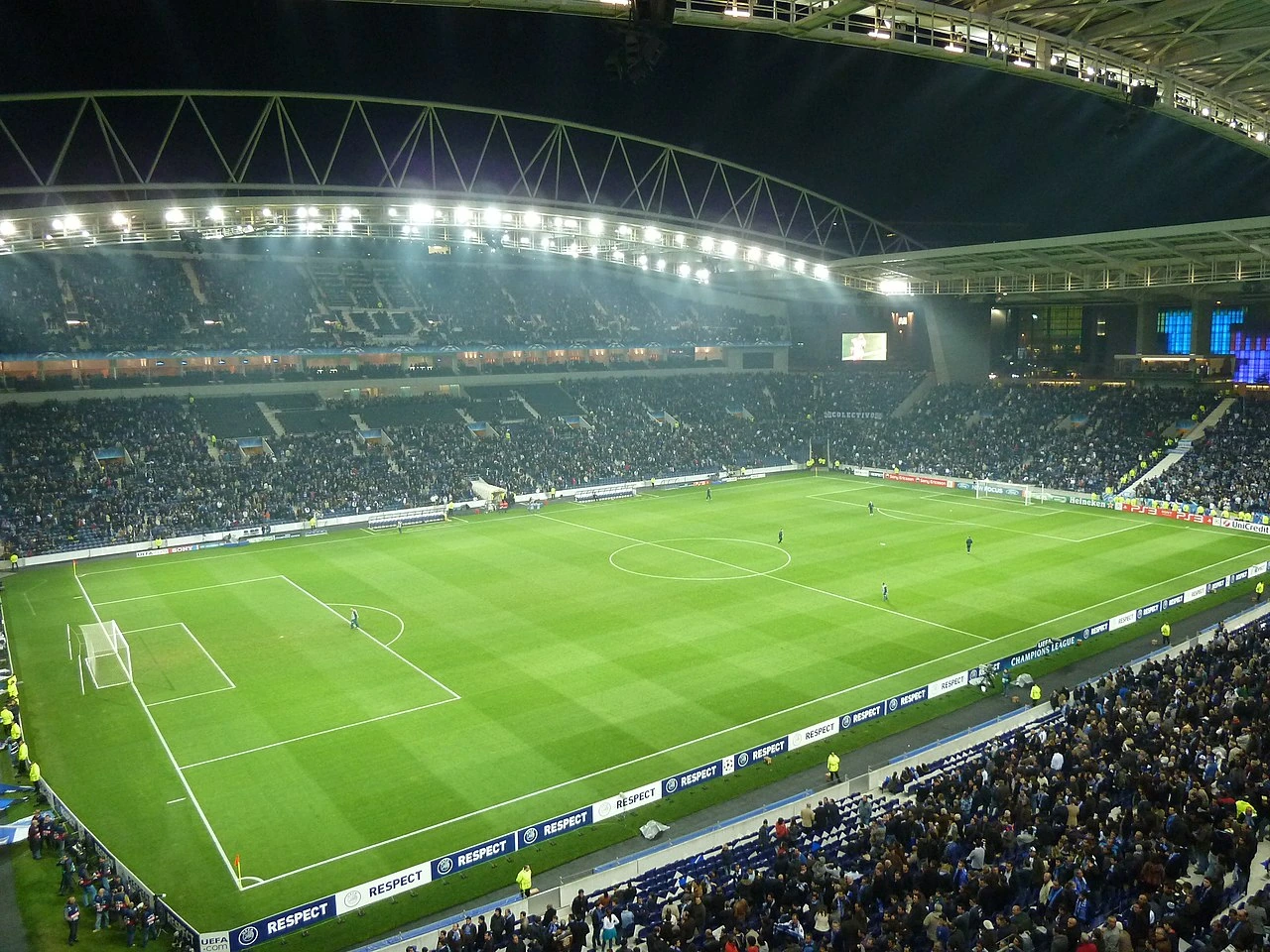
FC Porto Net Worth Explained: Value, Equity, and How to Verify
FC Porto net worth explained with a verifiable valuation method using assets, players, income, and net debt.

Pestana CR7 Net Worth Explained: Brand Value and Ownership
Explains Pestana CR7 net worth by valuing the hotel brand and ownership, not Cristiano Ronaldo’s personal wealth.

Fernandinho Net Worth: Salary, Earnings Range and Income Sources
Fernandinho net worth estimate with salary, club contract earnings, endorsements, and why figures differ across sources.