
Garrincha's net worth at the time of his death in 1983 was effectively near zero, and possibly negative given documented debts and financial hardship. If you are comparing Garrincha to other players on sites that publish fc porto net worth figures, it helps to remember that those numbers may reflect modern estimates more than verifiable assets Garrincha's net worth. Retrospective estimates from celebrity net-worth sites place figures between $1 million and $5 million USD, but those numbers have almost no archival foundation and should be treated as rough proxies at best. The honest answer is that Manuel Francisco dos Santos, one of the greatest footballers who ever lived, died poor, and any headline figure you see online reflects modern guesswork rather than verified wealth.
Garrincha Net Worth Estimate: Earnings, Sources, and Method

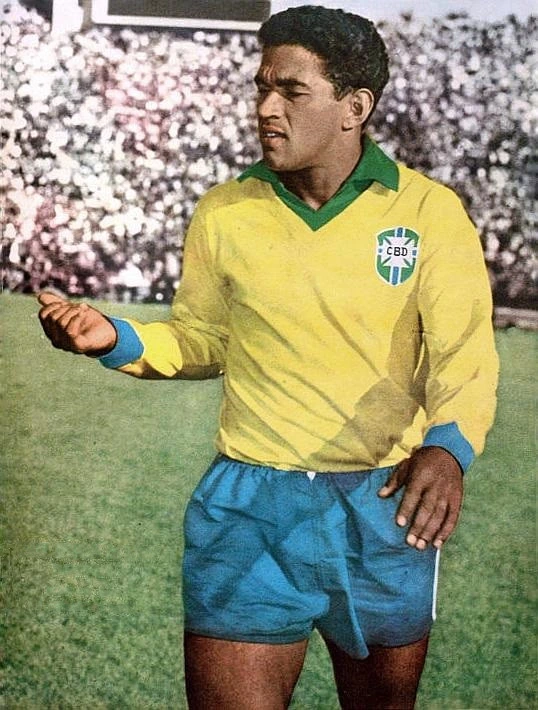
Who Garrincha was, and why "net worth" is complicated for him
Manuel Francisco dos Santos (October 28, 1933 – January 20, 1983), universally known as Garrincha, was a Brazilian right winger widely regarded as one of the most naturally gifted players in football history. Born in Pau Grande in the state of Rio de Janeiro, he debuted professionally with Pau Grande FC around 1947 before joining Botafogo in 1953, where he stayed until 1966. He went on to have shorter stints at Corinthians (1966–67), Flamengo (1968–69), and several other clubs including Barranquilla, Red Star Paris, and Olaria. He was a two-time FIFA World Cup champion with Brazil, winning in 1958 and 1962, and at the 1962 tournament in particular he was the undisputed best player in the competition.
When we talk about "net worth" for a footballer, we mean total assets minus total liabilities at a given point in time. For active or recently retired modern players, that calculation draws on salary records, endorsement contracts, investment portfolios, and property holdings. For a player from Garrincha's era, almost none of that data is publicly available in verifiable form. Brazilian football in the 1950s and 1960s operated without the transparency or documentation standards we associate with modern contracts. There were no public salary disclosures, no agent-negotiated endorsement deals with published terms, and no pension infrastructure comparable to what players in Europe or today's Brazil enjoy. That context shapes every number you'll encounter when you search for Garrincha's net worth.
The current net worth estimate and what confidence range is defensible

Based on all available credible sources, the most defensible estimate for Garrincha's net worth at his peak earning years (roughly 1958–1962) is in the range of $50,000 to $200,000 USD in contemporary value, or very roughly $500,000 to $2 million in 2026 dollars when inflation-adjusted. By the time he died on January 20, 1983, that accumulated wealth had been largely erased by financial mismanagement, alcoholism, and what multiple sources describe as exploitative contract arrangements.
You will find sites claiming figures like $1 million, $2 million, or even $5 million USD. Those estimates are generated by aggregator platforms that rely on public secondary sources such as Wikipedia and Google search results rather than archival contracts or asset documentation. There is no audit trail behind those numbers. The confidence range for any precise modern-equivalent figure is very low. What we can say with reasonable confidence is this: Garrincha earned meaningful sums during his peak years, received some post-career government recognition payments, and retained almost none of it by the end of his life.
Career earnings breakdown: clubs, salaries, and appearances
Garrincha's primary earning years were spent at Botafogo from 1953 to 1966. Scholarly work on his career, including academic studies of Brazilian football from that era, notes that Garrincha signed contracts that were later described as highly unfavorable to him. One documented account describes him accepting what were called "outrageous contracts" with Botafogo, and there are records indicating his salary was withheld at certain points. A journalist also uncovered the original transfer record from 1953 showing what Botafogo paid to bring him in from Pau Grande, which provides a data point on his early market value even if the specific figure was modest by any standard.
His international career spanned 50 caps for Brazil, with his first cap recorded on September 18, 1955 at age 21. The same kinds of data gaps and estimation problems often show up when people search for the Portugal national football team net worth. Based on RSSSF's match-by-match records, we can reconstruct his participation in major tournaments. RSSSF’s match-by-match international records for Garrincha list his caps and goals with dates, opponents, venues, and competition labels, including a first-cap age marker [RSSSF's match-by-match records](https://www. rsssf.
org/miscellaneous/garrincha-intl. html). For the 1958 and 1962 World Cups, Brazilian players received appearance fees and bonuses from the Brazilian Football Confederation (CBF, then CBD). Exact bonus figures for those tournaments are not officially published in a way that lets us assign a precise dollar amount to Garrincha specifically, but FIFA's documentation of Brazil's bicampeonato run confirms his participation in enough matches to have qualified for full tournament bonuses at both competitions.
Participation-based proxies for those two tournaments, using what is known about Brazil squad payment structures from that period, suggest he would have received the equivalent of a few thousand dollars per World Cup, which was meaningful at the time but not transformative wealth.
His later-career clubs (Corinthians, Flamengo, and others) paid declining wages as his physical condition deteriorated. By the late 1960s, Garrincha was no longer the explosive talent he had been, and his earning power reflected that. Clubs including Barranquilla and Red Star Paris added small amounts to his career total but nothing that would significantly change the overall picture.
| Club | Approximate Period | Estimated Earnings Role | Data Availability |
|---|---|---|---|
| Pau Grande FC | 1947–1953 | Amateur / semi-professional, minimal wages | Very low |
| Botafogo | 1953–1966 | Primary career earnings, reportedly unfavorable contracts | Low (qualitative sources only) |
| Corinthians | 1966–1967 | Declining-career wages | Very low |
| Flamengo | 1968–1969 | Late-career appearance fees | Very low |
| Other clubs (Barranquilla, Red Star, Olaria) | 1969–1972 | Minimal earnings, career wind-down | Very low |
Endorsements and sponsorships: what the record actually shows
Garrincha did have some commercial visibility during his peak years, but structured endorsement contracts in the modern sense were almost nonexistent for Brazilian footballers of his generation. The clearest documented example of a commercial role is his function as an informal ambassador for Brazilian coffee, described in historical accounts as "embaixador do café brasileiro." This was more of a promotional appearance arrangement than a formal sponsorship deal, and no published earnings figures accompany it.
There is no public record of Garrincha signing major boot deals, apparel contracts, or brand partnerships with multinational companies of the kind that would become standard for top players from the 1990s onward. The endorsement infrastructure simply did not exist at scale in Brazilian football during the 1950s and 1960s. This is a meaningful gap: for a modern superstar, endorsements can easily double or triple career earnings. For Garrincha, that revenue stream was essentially absent or too informal to quantify. Any net-worth site that implies significant endorsement income for him is extrapolating without evidence.
Post-career finances: what happened to the money
Garrincha's post-career financial trajectory is one of the more documented aspects of his story, though not in a way that produces positive numbers. Multiple credible sources, including Exame and other Brazilian outlets, record statements from Garrincha himself about poverty and financial struggle in his later years. A 1978 account quotes him saying he spent money almost exclusively on cigarettes, which gives a vivid sense of how constrained his finances had become. He spoke openly about alcoholism, estrangement from friends, and a general sense of having been abandoned after his playing days ended.
There is one concrete post-career monetary data point worth noting. In 2012, the Brazilian government implemented a special assistance program paying R$100,000 to former players from the 1958, 1962, and 1970 World Cup-winning squads. Garrincha was listed among the deceased recipients, meaning the benefit was directed to his estate or surviving family rather than to him personally. A similar program was reported by RTP and other international outlets. This is not "post-career earnings" in the traditional sense, but it represents the most clearly documented financial figure associated with his legacy, and it arrived nearly three decades after his death.
Garrincha died of cirrhosis of the liver on January 20, 1983. Wikipedia and multiple biographies describe his final years as marked by severe physical and mental decline. There is no documented estate of meaningful value, no reported property holdings, and no investment portfolio on record. The accumulated evidence strongly points to a net worth at death that was negligible or negative.
How net worth estimates are calculated, and why the numbers vary so much

If you search for Garrincha's net worth today, you will get a range of figures from different sites. If you are also comparing another player’s value claims, you may want to look at the Radamel Falcao net worth figures and how they were estimated. Some will say $1 million, others $2 million, and a few will venture higher. Those differences almost never reflect access to different primary sources. They reflect different assumptions plugged into the same basic formula: estimated career earnings plus estimated endorsements minus estimated expenses, adjusted for inflation and rounded to a tidy number.
Sites like CelebsMoney or CelebrityHow generate these estimates by referencing publicly available secondary sources such as Wikipedia and general web searches. They are not working from archival contracts, CBF payment records, or verified asset documentation. This is not necessarily a criticism of those sites specifically; the honest problem is that verified primary financial records for Brazilian players from the 1950s–1970s are largely unavailable to the public, and in many cases may not exist in any organized form at all. Academic and journalistic work on Garrincha's finances tends to be qualitative rather than quantitative, which means it can tell you he was underpaid and poorly advised but cannot give you a precise salary figure for 1960.
The result is that net-worth estimates for Garrincha across different sites are best understood as informed approximations rather than researched figures. For context, Brazilian contemporaries with longer post-career commercial lives, such as players who bridged into the television era, have better-documented financial histories. Garrincha died relatively young (at 49) and in a period before athlete wealth management became an industry in Brazil.
How to evaluate and verify Garrincha's net worth on a reference site
When you land on any net-worth reference site and see a figure for Garrincha, here is the practical checklist for evaluating whether it is worth trusting.
- Check whether the site distinguishes between confirmed earnings and estimates. A credible site will label figures as estimates and explain what methodology produced them, rather than presenting a single number as fact.
- Look for source transparency. Does the site link to or name specific sources? For Garrincha, credible sources include Britannica's biography, RSSSF international appearance records, Museu do Futebol documentation, and journalism from Brazilian outlets like Globo, Exame, and UOL. A site citing only 'public sources' or 'Wikipedia' is using very low-confidence inputs.
- Check the confidence range. Any site presenting a precise single figure like '$1,800,000' for a player from Garrincha's era is implying more precision than the data supports. A credible source should acknowledge a wide range or explicitly note that the figure is a rough estimate.
- Look for contextual explanation. Does the site explain why financial records from his era are incomplete? Does it note the documented financial hardship of his final years? If a site presents a multi-million-dollar figure without acknowledging his well-documented poverty at death, it has not done the historical work.
- When sources conflict, default to the more conservative estimate. Given what is known about Garrincha's contracts, lifestyle, and final years, higher estimates are harder to defend than lower ones. The burden of proof is on the higher figure.
- Cross-reference with the CBF/government benefit data. The R$100,000 program from 2012 is the most concretely documented financial figure in Garrincha's legacy. Any site that includes this as a data point is engaging with real sources. Any site that does not mention it and still claims a large net worth is missing key context.
If you are comparing Garrincha's financial profile to other Brazilian players of different eras, the contrast is stark. Players like Fernandinho or others who played in modern European leagues with transparent salary structures have much better-documented financial histories. For a contrast, articles about Fernandinho net worth often discuss modern salary documentation and more transparent financial records.
Similarly, clubs like FC Porto and broader national team ecosystems such as the Brazil national football team generate documented revenue that flows more traceably to players. For similar figures tied to the Portugal national football team net worth, the availability of verified primary records is often the main limitation, not the popularity of the player broader national team ecosystems such as the Brazil national football team.
Garrincha played in an era before any of that infrastructure existed, and his net worth reflects that absence more than it reflects any failure of talent or effort on his part.
The bottom line for anyone researching this topic: treat any Garrincha net worth figure above $500,000 (in any currency equivalent) as an estimate that has not been verified against primary sources. To compare, see how the same kind of methodology is often used for falcao net worth on similar reference sites.
The true picture, supported by the historical record, is of a player whose genius was never matched by financial reward, whose career earnings were constrained by unfavorable contracts, and who died with little to show in material terms. If you are comparing him with others, check how daniel falcao net worth figures are handled by the same kind of sources and assumptions. That is the honest answer, and it is the one this site's methodology is designed to deliver.
FAQ
What is the most reliable way to interpret Garrincha net worth figures online?
Treat any single number as a low-confidence guess, not a documented total. The article’s most defensible approach is to use a range, then sanity-check it against the era’s limited disclosure (no public salaries, few verifiable endorsements, and scarce asset records).
Why do some sites claim Garrincha net worth is $1 million to $5 million, while others show much less?
Those higher figures usually come from a formula that inflates estimated career earnings, then layers in assumed endorsement income and rounded inflation adjustments. Since there is no archival contract trail to anchor those inputs, the spread reflects assumptions more than different evidence.
How can I tell whether a Garrincha net worth site is using weak assumptions?
Look for signs like generic “career earnings” with no year-by-year breakdown, endorsement claims that are not specific to documented roles, and lack of explanation for how liabilities (debts, withheld salary, contract penalties) are handled. If the method is vague and the number is neatly rounded, confidence should drop.
Does Garrincha earn money from World Cup bonuses during 1958 and 1962?
He likely benefited from participation-based bonuses paid by the Brazilian federation at the time, but the article notes that exact Garrincha-specific dollar amounts are not publicly verifiable. A practical approach is to treat those as a small contribution relative to later mismanagement, not as proof of large wealth.
Why isn’t “net worth at peak” the same as “net worth at death”?
Because net worth can be rapidly wiped out by liabilities, spending, and exploitative or unfavorable arrangements. The article’s context indicates that even meaningful peak earnings were largely erased by later financial collapse.
Was Garrincha’s “Brazilian coffee ambassador” role a real endorsement deal?
It reads more like an informal promotional appearance than a modern sponsor contract. The key takeaway is that without published payment terms, you should not assume the same revenue structure as later era brand partnerships.
How should I convert older Brazilian amounts or “contemporary value” figures if I’m comparing to today’s dollars?
Use ranges, not exact conversions. Also separate “money earned” from “money retained,” because mismanagement and withheld compensation can dominate the final net worth outcome even when conversion is done correctly.
Did Garrincha receive any government financial support after retirement?
The article highlights a later program that paid R$100,000 to deceased former World Cup squad members in 2012, meaning it likely went to his estate or surviving family rather than to him personally. If you’re assessing his own wealth, that payment should be treated differently than income received while alive.
Is there any credible evidence that Garrincha left a valuable estate?
The article indicates no documented estate of meaningful value, no reported property holdings, and no investment portfolio on record. So claims of large inherited wealth are especially hard to justify from what is publicly known.
What number should I use if I need a single figure for a comparison study?
Use a conservative range midpoint or keep it as a band, then clearly label it as an estimate. As a decision aid from the article’s checklist, treat figures above $500,000 (any equivalent currency) as not reliably verified against primary sources.

Framework to estimate Brazil national football team net worth using revenue, brand value, and competition earnings.
FC Porto net worth explained with a verifiable valuation method using assets, players, income, and net debt.

Explains Pestana CR7 net worth by valuing the hotel brand and ownership, not Cristiano Ronaldo’s personal wealth.