
FC Porto's net worth, looked at through the lens of their audited financial statements, is technically negative at the balance-sheet level: total liabilities of roughly €490.9 million exceeded total assets of €407.1 million as of 30 June 2024, implying a negative book equity position. That sounds alarming, but it is not the whole story. A market-based or enterprise-value estimate for Porto would land considerably higher once you factor in the commercial value of the brand, the earning power of Estádio do Dragão, and the squad's transfer market worth. Understanding which concept you are dealing with is step one before you trust any number you see.
FC Porto Net Worth Explained: Value, Equity, and How to Verify

Marcus Rendell
21 May 2026
What 'FC Porto net worth' actually means (it depends who you ask)

When most people search for a club's net worth, they are really asking one of three different questions. First, there is the balance-sheet equity concept: total assets minus total liabilities, essentially what the accountants report. UEFA's club licensing framework formalises this as the 'net equity position', tied directly to the club's annual financial statements. Second, there is enterprise value, which is a market-oriented estimate of what the whole club would be worth as a going concern to a buyer. Brand Finance, for example, publishes an enterprise value for top clubs that layers brand strength, squad economics, and revenue multiples on top of book figures. Third, some readers are really looking for the personal wealth of Porto's owners or executives, which is a completely separate question. Some readers also look specifically for Daniel Falcao net worth, but that is a separate, personal-finance question rather than a club net-worth calculation. FC Porto SAD is a listed entity (traded on Euronext Lisbon), so ownership wealth is tied to the stock price rather than the club's underlying book equity. These three concepts produce very different numbers, so it matters which one you want.
How the balance-sheet net worth is calculated
The most defensible starting point is the audited consolidated accounts that FC Porto SAD files publicly. For the year ended 30 June 2024, the consolidated balance sheet reports total assets and liabilities combined ('TOTAL DO CAPITAL PRÓPRIO E PASSIVO') of €407,113,499, up from €356,292,440 a year earlier. Total liabilities ('TOTAL DO PASSIVO') stand at €490,939,725, including current liabilities alone of €292,104,697. Simple arithmetic gives a negative shareholders' equity. This is the figure UEFA would scrutinise under its net equity rule when assessing whether Porto breaches its financial sustainability thresholds.
There is an important wrinkle, though. In 2023/24 the club recognised a revaluation gain of €84,910,986 on tangible fixed assets (primarily the stadium) directly through Other Comprehensive Income rather than through the profit and loss account. That OCI credit boosted equity without touching the reported net loss of €22.57 million for the year (an improvement from the €48 million loss in 2022/23). So the balance sheet looks better than the income statement alone would suggest, but the improvement comes largely from an accounting revaluation rather than underlying cash generation.
Moving to enterprise value

An enterprise value approach strips out capital structure and asks: what is this business worth to a buyer? Analysts typically apply a revenue or EBITDA multiple to the club's recurring revenues, then add asset values and subtract net debt. Porto's recurring operating revenue for 2023/24 totalled roughly €172.9 million (services revenue of €161.9 million plus product sales of €11.0 million), with additional items such as advertising ('Publicidade') broken out separately. Applying the kind of multiples that specialist sports valuers like Brand Finance use, and adjusting for Porto's high debt load, you arrive at an enterprise value estimate in a broad range rather than a single precise figure. Porto is not in the same commercial tier as Manchester United or Real Madrid, but it is a Champions League-calibre brand with genuine global reach, particularly in Brazil and other Portuguese-speaking markets.
Where Porto's money actually comes from
Porto's revenue base reflects the familiar structure of European elite clubs, though at a smaller scale than the Premier League or La Liga giants. The headline revenue line in 2023/24 sits above €170 million when you combine the main income categories. Player trading (transfer fees received) is excluded from the operating revenue figures in the segment disclosures, which is the right way to look at recurring commercial health. The interim 2024/25 filing shows that external operating revenues (excluding player-transfer proceeds) came in at around €77 million for the first half, compared to €107.8 million in the same period a year earlier, signalling some volatility.
- Broadcasting and UEFA prize money: Champions League participation is Porto's single biggest revenue lever. A group-stage exit vs. a deep run can swing tens of millions of euros.
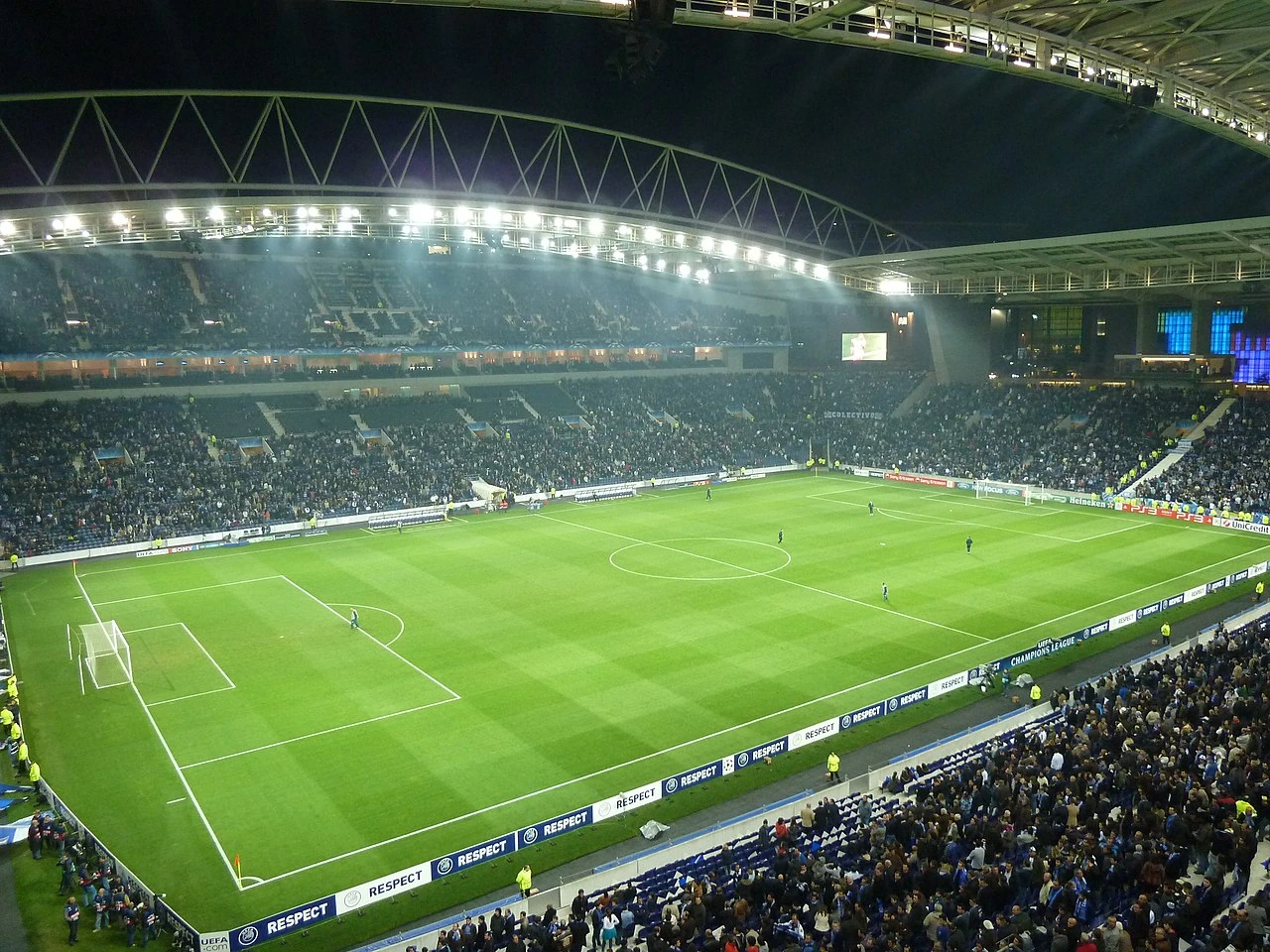
- Matchday income: Estádio do Dragão holds around 50,000 fans, and Porto consistently sells out for European games, making matchday a meaningful contributor.
- Commercial and sponsorship: The 'Publicidade' line in the accounts, along with kit and licensing deals, forms the commercial pillar. Porto has worked to grow this relative to peers.
- Player trading: Transfer fee receipts are Porto's most famous revenue tool. The club has built a model around developing and selling players at a profit, which functions almost like a trading business layered on top of the football operation.
- Subsidiary operations: Porto Canal (media) and Porto Seguro (insurance/services) contribute to consolidated results and are listed separately in the goodwill and segment disclosures.
Key assets: the stadium, the squad, and everything else

Estádio do Dragão is the single most valuable tangible asset on Porto's books. The 2023/24 annual report lists a net carrying value of €213,098,000 for the stadium as of 30 June 2024. The valuation methodology uses a discounted cash flow income approach with a discount rate of 8.18%. That €213 million figure drove the large OCI revaluation gain mentioned earlier. It is a fair-value estimate, not a transaction price, so it would only be tested if Porto actually tried to sell or refinance the stadium. But it does represent a meaningful floor for what the physical infrastructure alone is worth.
Player contracts are the other major asset class, recorded as intangible assets under 'Ativos intangíveis – Valor do plantel'. These are carried at acquisition cost less accumulated amortisation and impairment, not at market transfer value. In 2023/24, the gross movements included €58.5 million of new acquisitions, €27.8 million of disposals, and €22.1 million of write-offs ('Abates'). The book value of the squad is almost always lower than its real transfer market value, especially for Porto, whose scouting and development model consistently produces players worth far more than their carrying cost. That gap is a key reason why balance-sheet net worth understates the club's true economic value.
Beyond the stadium and squad, Porto's consolidated balance sheet includes goodwill from subsidiaries like Porto Canal and Porto Seguro, training facilities, and other intangible assets. These are genuine contributors to enterprise value, though they are harder to isolate without digging into the notes to the accounts.
Debt, liabilities, and the financial risks you need to know about
Porto's debt position is the most serious financial concern the club faces, and it is not a new problem. Total liabilities of €490.9 million against total assets of €407.1 million means the club is technically insolvent on a pure book-equity basis. The current liabilities alone (€292.1 million) are substantial, indicating significant short-term obligations. The club itself has acknowledged the need to address short-term liquidity, with management publicly committing to getting accounts current as a priority.
The net loss for 2023/24 was €22.57 million, which is actually a marked improvement from the €48 million loss in 2022/23. And the most recent full-year results (2024/25) show Porto recording a profit of €39.2 million, a meaningful swing that suggests the financial trajectory is improving. But high current liabilities remain a structural vulnerability. If UEFA tightens enforcement of its financial sustainability rules or if a poor Champions League season cuts broadcasting income, the liquidity pressure could intensify quickly. That is the single biggest risk to watch.
Recent trends and what to watch going forward
The directional story for Porto's finances has improved noticeably over the past two years. The loss halved from 2022/23 to 2023/24, and 2024/25 delivered a reported profit of €39.2 million. The club also reported a recovery of €66.4 million in consolidated equity in the first half of 2024/25, driven by a combination of operating improvement and the prior-year stadium revaluation flowing through. Total assets grew by around €148 million in that period, while liabilities fell by approximately €20 million.
The variables most worth tracking are: Champions League revenue (participation and round-of-progression), net transfer activity (Porto's model depends on selling well), any changes to major sponsorship or broadcasting deals, and how the club manages its current liabilities rollover. On the player trading front, Porto's approach is directly comparable to how clubs like those affiliated with influential agents or development-focused ownership structures operate across Europe. Readers interested in how individual player values contribute to this picture will find that profiles of major Porto alumni (like Radamel Falcao, who passed through the club and whose career earnings are tracked separately) illustrate exactly how Porto's selling model generates value. If you are also looking for falcao net worth, remember that his earnings and career wealth are tracked separately from Porto’s club valuation. Radamel Falcao's net worth is often discussed separately from the club's finances, since it reflects his personal earnings rather than Porto's balance sheet.
A quick comparison: balance-sheet vs. enterprise-value approaches
| Metric | Approach | FC Porto figure (approx.) | What it tells you |
|---|---|---|---|
| Book equity / net assets | Balance sheet (UEFA net equity rule) | Negative (liabilities exceed assets by ~€84m as of June 2024) | Accounting solvency; UEFA compliance benchmark |
| Total assets | Balance sheet | ~€407m (June 2024) | Size of the asset base before debt |
| Total liabilities | Balance sheet | ~€491m (June 2024) | Debt and obligation burden |
| Stadium fair value | DCF income approach | ~€213m (June 2024) | Key tangible asset anchor |
| Annual recurring revenue | Income statement (ex-transfers) | ~€173m (FY 2023/24) | Commercial and operational scale |
| Net result | Income statement | -€22.6m (2023/24); +€39.2m (2024/25) | Profitability trend |
| Enterprise value estimate | Revenue/EBITDA multiple (market-based) | Not officially published; mid-range European club tier | What a buyer might pay; higher than book equity |
Where the numbers come from and how to verify them

The most reliable source for any FC Porto financial figure is the club's own audited consolidated accounts, filed as 'Relatório e Contas' on an annual basis (year ending 30 June) and as an interim report for the first half (ending 31 December). FC Porto SAD is listed on Euronext Lisbon, which means these filings are subject to securities regulation and independent audit, making them materially more trustworthy than estimates or third-party claims. You can access them directly through the Portuguese securities regulator (CMVM) or through the Euronext disclosure portal.
For market-based enterprise value estimates, Brand Finance's Football 50 report is one of the more methodologically transparent sources available. It explicitly frames its output as 'enterprise value' using a sports-valuation methodology rather than raw book equity, which makes it more useful for comparison with Premier League or La Liga clubs. UEFA's own financial sustainability reports, published periodically, provide aggregate data and flag clubs with net equity concerns, which can serve as a cross-check.
When you are reading any third-party estimate for Porto's net worth, ask these questions: Is it using book equity or enterprise value? Does it include or exclude player transfer value above book cost? How is the stadium valued, and is the debt load properly deducted? A credible estimate will be transparent about each of these choices. If a site just quotes a round-number 'net worth' without explaining the methodology, treat it as a rough proxy at best.
- Download the latest 'Relatório e Contas' from FC Porto SAD's investor relations page or the CMVM filing database.
- Find the consolidated balance sheet and note the 'TOTAL DO CAPITAL PRÓPRIO' (total equity) line directly.
- Check the total liabilities figure and split between current and non-current to assess liquidity risk.
- Review the player intangibles note ('Valor do plantel') to understand book vs. market squad value gap.
- Look at the OCI/revaluation section to separate accounting gains from genuine cash-generating improvement.
- Cross-reference net results with cash flow from operations to see whether profits are backed by real cash.
- Compare with Brand Finance or similar enterprise-value sources for a market-calibrated alternative figure.
FC Porto is a financially complex club: technically over-leveraged on a book basis, but commercially and operationally meaningful in European football with improving earnings trends as of 2024/25. The honest answer to 'what is FC Porto's net worth' is that it depends entirely on the framework you use, and any single number without methodology context is incomplete. If you are trying to estimate Garrincha net worth, use the same rule of thumb: confirm whether you are looking at book-style figures, market-style valuation, or personal earnings. If you are comparing that with Pestana CR7 net worth, use the same method-and-context check so the numbers are like for like. If you are comparing estimates like Fernandinho net worth, focus on whether the source is valuing the person or the club, since the methodology will be completely different. If you are specifically looking for the Portugal national football team net worth, make sure you switch from club valuation logic to how national-team finances are reported and estimated. The balance-sheet equity is negative, the enterprise value is substantially positive, and the trajectory is moving in the right direction. Keeping an eye on the next annual filing (for the year ending June 2025) will give you the clearest updated picture. If you are looking for the Brazil national football team net worth specifically, you will need to use the national-team spending and sponsorship context rather than a club's balance-sheet equity.
FAQ
Why does FC Porto net worth show up as positive on some sites when the balance sheet equity is negative?
No. In Porto SAD’s audited accounts, the balance-sheet shows liabilities exceeding assets, which makes book equity negative. Any positive “net worth” you see online is usually an enterprise-value style estimate (including brand, stadium economics, and squad earning capacity), not the accountant’s shareholders’ equity.
How can I tell whether Porto’s net worth improvement is real or accounting-driven?
Don’t rely on a single snapshot number. A revaluation can inflate equity without improving cash flow, so check whether the prior-year comparison shows gains driven by OCI revaluation (like the stadium) versus improvements in operating results. If profits improve but current liabilities stay high, liquidity risk can remain.
What’s the fastest way to verify whether a “net worth” figure is book equity or enterprise value?
If a site calls it “net worth,” confirm whether they mean book equity (assets minus liabilities) or enterprise value (buyer-style valuation). A quick test is whether they explicitly mention treating stadium value as a fair-value and subtracting net debt. If they do neither, the number is likely not enterprise value.
Why does Porto’s reported squad value not match the transfer market value people quote?
Yes, and it’s a common mismatch. Squad intangibles are usually recorded at acquisition cost less amortisation and impairment, while transfer market value reflects what the market might pay. If you compare book equity to transfer market estimates, the “club value” will look understated on the balance sheet.
If Porto’s enterprise value is positive, why is liquidity still a major concern?
Watch the gap between total liabilities and current liabilities. Even if enterprise value is positive, large current liabilities can create rollover pressure, especially after a weaker Champions League season. For verification, check whether management commentary and interim reports show progress on getting accounts current.
How should I check whether a stadium valuation in a net worth estimate is credible?
Look for the stadium line and the valuation basis. The accounts will show carrying value and, in notes, how fair value was supported (for example by a discounted cash flow approach). If a third-party net-worth claim uses a stadium figure, see whether it aligns with the carrying value or a different assumption.
Is FC Porto net worth the same as the owners’ personal wealth?
Don’t assume the club’s finances equal the owners’ wealth. Porto SAD is listed, so ownership wealth ties to equity value and ultimately the stock price, while the club’s “net worth” depends on accounting or enterprise-valuation rules. These can move differently.
When comparing enterprise value estimates, which revenue definition should I look for?
A quality enterprise value estimate should state what revenues it uses and whether it excludes player-transfer proceeds from operating revenue. Porto’s recurring revenue base is typically presented separately from player trading, so inconsistent treatment can swing the valuation materially.
How often should I re-check FC Porto’s net worth instead of trusting one number?
Yes. Porto’s interim and annual filings (year ending June 30 for annual, and mid-year for interim) can show equity swings from OCI items and operating trends. If you only use an older year’s “net worth,” you can miss a turnaround like the improvement seen in 2024/25 reporting.
What three indicators should I monitor next if I want to forecast whether Porto’s net worth will get better?
Track Champions League-related revenue, net transfer activity (net sell activity), and the handling of current liabilities rollover. If operating profit improves but current obligations rise or short-term liquidity worsens, your enterprise-value view may stay positive while risk increases.
Citations
UEFA’s club licensing framework uses the wording “net equity position”, defined as a specific figure reported from the club’s annual/interim financial statements (i.e., a balance-sheet concept) rather than an enterprise-value or market-based valuation.
https://documents.uefa.com/r/UEFA-Club-Licensing-and-Financial-Sustainability-Regulations-2025/Article-70-Net-equity-rule-Online
UEFA’s licensing document uses the explicit term “net equity position” tied to what the club must report in its financial statements, providing wording designed to avoid confusion with enterprise value/owner wealth.
https://editorial.uefa.com/resources/0274-14dc03ef33b9-3e2caa872860-1000/20220408_club_licensing_and_financial_sustainability_regulations_2022-en.pdf
Brand Finance publishes an “enterprise value” for clubs and explicitly frames it as an “enterprise value” concept (not equity/net assets), and describes its methodology as sports-valuation oriented (used for “club enterprise value”).
https://brandfinance.com/insights/club-enterprise-value
Enterprise value vs equity value definitions are commonly distinguished by “removing capital structure from the equation” (enterprise value) versus equity/net assets concepts (equity value). This distinction is used to avoid mixing owner-equity with asset/firm value.
https://corporatefinanceinstitute.com/resources/capital_markets/enterprise-value-vs-equity-value/
FC Porto’s latest full annual filing available in the club’s document set (for the period ended 30 June 2024) presents a consolidated set of financial statements (“Demonstração Consolidada…”), with total assets/liabilities and consolidated result lines.
https://files.app.fcporto.pt/docs/c85f332ae15c6a978a04dbc000680aba.pdf
In the consolidated balance sheet in the 2023/2024 annual report, the “TOTAL DO CAPITAL PRÓPRIO E PASSIVO” is €407,113,499 as of 30.06.2024, and €356,292,440 as of 30.06.2023 (balance-sheet totals presented in EUR).
https://files.app.fcporto.pt/docs/c85f332ae15c6a978a04dbc000680aba.pdf
In the 2023/2024 consolidated income statement, revenue is shown via line items including “Vendas” €10,964,494 and “Prestações de serviços” €161,915,154 for 30.06.2024; “Outros proveitos” is €1,618,929 (EUR).
https://files.app.fcporto.pt/docs/c85f332ae15c6a978a04dbc000680aba.pdf
In the 2023/2024 consolidated income statement, the club reports “Depreciações e Amortizações, excluindo passes de jogadores” of €9,774,683 (EUR) (with a comparative figure for 30.06.2023).
https://files.app.fcporto.pt/docs/c85f332ae15c6a978a04dbc000680aba.pdf
In the 2023/2024 consolidated income statement, the consolidated net result (“Resultado líquido consolidado do exercício”) is -€22,570,498 for the year ended 30.06.2024 (and -€48,039,501 for 30.06.2023).
https://files.app.fcporto.pt/docs/c85f332ae15c6a978a04dbc000680aba.pdf
In the 2023/2024 consolidated balance sheet, the filing provides a breakdown including “Total de passivos correntes” of €292,104,697 and “TOTAL DO PASSIVO” of €490,939,725 (EUR) as of 30.06.2024.
https://files.app.fcporto.pt/docs/c85f332ae15c6a978a04dbc000680aba.pdf
In the 2023/2024 consolidated balance sheet, total shareholders’ equity (“TOTAL DO CAPITAL PRÓPRIO”) is presented as part of the combined totals, and the filing reports “TOTAL DO CAPITAL PRÓPRIO E PASSIVO” €407,113,499 for 30.06.2024 and €356,292,440 for 30.06.2023.
https://files.app.fcporto.pt/docs/c85f332ae15c6a978a04dbc000680aba.pdf
FC Porto’s latest interim consolidated filing available in the document set is “Relatório e Contas 1ºSemestre 2024|2025” (period labeled 2024/2025). It includes consolidated segment and operating profit/cash-flow disclosures.
https://files.app.fcporto.pt/docs/5dbabe913ecc4a86fb2dd02cf8750069.pdf
In the 1º Semestre 2024/2025 consolidated interim reporting, the filing presents “Proveitos operacionais excluindo proveitos com passes de jogadores” by segment, and includes totals for external-client operating revenues (e.g., 31.12.2024 total €77,050; comparative 31.12.2023 external-client total €107,767; figures shown in the report’s EUR thousands-style table).
https://files.app.fcporto.pt/docs/5dbabe913ecc4a86fb2dd02cf8750069.pdf
The 2023/2024 consolidated “Resultado líquido consolidado” is -€22.57m, but the filing also shows a large positive OCI/equity component from “Reavaliação de ativos fixos tangíveis” of €84,910,986 (EUR) recognized in the consolidated statement of integral income.
https://files.app.fcporto.pt/docs/c85f332ae15c6a978a04dbc000680aba.pdf
In the 2023/2024 annual report, the tangible fixed assets table explicitly lists “Recintos desportivos (Estádio do Dragão)” with a net value shown in the table (“Valor líquido” €213,098,000 as of 30.06.2024).
https://cgov.pt/images/ficheiros/cgs-nacionais/2024/FCPorto.pdf
The 2023/2024 annual report includes a note describing the accounting revaluation of the stadium (“Recintos desportivos (Estádio do Dragão)”) and its fair-value measurement basis (fair value concept and revaluation impact recognized through OCI/equity).
https://files.app.fcporto.pt/docs/c85f332ae15c6a978a04dbc000680aba.pdf
The interim report commentary (as captured in a filing mirror) states that “Estádio do Dragão” fair value at 30 June 2024 was determined as €213 million using a DCF-based income approach, with Discount Rate/Yield stated (e.g., yield 8.18%).
https://financialreports.eu/filings/futebol-clube-porto/interim-quarterly-report/2026/33075634/
The 2023/2024 annual report includes a dedicated note “Ativos intangíveis – Valor do plantel” with gross value movements and amortisation/losses, showing the accounting-driven nature of registered player-right assets (i.e., book value tied to acquisition costs less accumulated amortisation/impairment).
https://cgov.pt/images/ficheiros/cgs-nacionais/2024/FCPorto.pdf
For the year ended 30.06.2024, the “Ativos intangíveis – Valor do plantel” note shows gross value movement components including acquisitions (€58,463,766), alienations (€27,839,772), and “Abates” (€22,107,930) (EUR) before amortisation/impairment lines.
https://cgov.pt/images/ficheiros/cgs-nacionais/2024/FCPorto.pdf
The 2023/2024 annual report separately discloses “GOODWILL” with identifiable components (e.g., “Porto Seguro” and “Segmento ‘Porto Canal’”), showing that club “value” is not only stadium/player assets but also goodwill and other intangible assets.
https://cgov.pt/images/ficheiros/cgs-nacionais/2024/FCPorto.pdf
The consolidated balance sheet in 2023/2024 reports a large total liability figure (“TOTAL DO PASSIVO” €490,939,725), including “Total de passivos correntes” (€292,104,697), which is essential for deriving net debt/net worth-like metrics from balance-sheet components.
https://files.app.fcporto.pt/docs/c85f332ae15c6a978a04dbc000680aba.pdf
In the 2022/2023 consolidated financial statements, the filing reports that the balance sheet shows total equity and liabilities totals (e.g., “Total do capital próprio e do passivo” €307,730,370 for 30 de junho de 2023), enabling year-over-year equity trend checks.
https://files.app.fcporto.pt/docs/7c771a9dd190282d6d11d7e49d52b948.pdf
FC Porto’s news highlights for “Relatório e Contas” state the club reported positive results and an improvement in consolidated equity in 1º semestre 2024/25, including a stated recovery of €66.4m in consolidated equity (as described on the club’s official site).
https://www.fcporto.pt/pt/noticias/20250211-pt-destaques-do-relatorio-e-contas
FC Porto’s official news summary for the 1º semestre (as of 31 Dec 2023) reports: increased total assets by €148m, increased operational revenues by €5m, and reduced liabilities by €20m (as stated in the club’s highlight communication).
https://www.fcporto.pt/pt/noticias/20240219-pt-fc-porto-teve-lucros-de-35-milhoes-de-euros
RTP reports that FC Porto SAD registered a net loss of €21m in 2023/24 and mentions consolidated accounts approval, which helps corroborate the main net result reported in the audited financial statements.
https://www.rtp.pt/noticias/futebol-nacional/sad-do-fc-porto-aprova-contas-da-epoca-202324-com-prejuizo-de-21-me_d1616833
FC Porto’s official site reports that for the last completed financial exercise (2024/25), the SAD finished with a profit of €39.2m and emphasizes continuing to grow commercial revenues and addressing short-term passivo liquidity.
https://www.fcporto.pt/pt/noticias/20251001-pt-queremos-ter-as-contas-em-dia
The interim consolidated filing provides operating revenue segmentation excluding player-transfer proceeds, which is key to distinguishing matchday/commercial/broadcast-type recurring revenue drivers from one-off player trading impacts.
https://files.app.fcporto.pt/docs/5dbabe913ecc4a86fb2dd02cf8750069.pdf
A reported income breakdown in FC Porto’s 2023/2024 reporting includes a line item for “Publicidade” with figures such as €30,827 (and €26,997 comparative), illustrating that commercial sponsorship/advertising revenue is explicitly itemized.
https://files.app.fcporto.pt/docs/8ccdad4a138ed8c1a9bfe68c46dad814.pdf
The annual report structure shows player economics are reflected through capitalized “Ativos intangíveis – Valor do plantel” (gross value, amortisations, impairments) rather than treating transfer fees as immediately expensed, enabling analysts to link squad amortisation to earnings volatility.
https://cgov.pt/images/ficheiros/cgs-nacionais/2024/FCPorto.pdf
The revaluation of tangible fixed assets (“Reavaliação de ativos fixos tangíveis”) is presented as part of the “Rendimento Integral” (OCI-like) rather than operating profit, so it can materially affect equity/net worth without improving underlying recurring EBITDA.
https://files.app.fcporto.pt/docs/c85f332ae15c6a978a04dbc000680aba.pdf
UEFA provides an explicit definition of “fair value” as an orderly transaction price between market participants (IFRS 13-style wording), which matters when clubs apply revaluations (e.g., stadium DCF-based fair values).
https://documents.uefa.com/r/UEFA-Club-Licensing-and-Financial-Sustainability-Regulations-2025/J.7-Definition-of-fair-value-Online?contentId=OkK8NFoPGDvy9OeuvS81mA
Brand Finance’s Football 50 preview materials describe an enterprise-value approach that incorporates multiple value drivers (e.g., squad value, brand strength) rather than relying strictly on balance-sheet book equity.
https://static.brandirectory.com/reports/brand-finance-football-50-2025-preview.pdf
Next Articles

Pestana CR7 Net Worth Explained: Brand Value and Ownership
Explains Pestana CR7 net worth by valuing the hotel brand and ownership, not Cristiano Ronaldo’s personal wealth.

Fernandinho Net Worth: Salary, Earnings Range and Income Sources
Fernandinho net worth estimate with salary, club contract earnings, endorsements, and why figures differ across sources.

Portugal National Football Team Net Worth: How to Estimate It
Practical way to estimate Portugal national team net worth by separating federation finances, team revenues, and player