
Michel Platini's net worth sits in the range of $4 million to $12 million as of 2026, based on a realistic accounting of his playing-era earnings, post-career administrative salaries, and known legal and financial complications. That range is wide on purpose: unlike active players with disclosed contracts, Platini's wealth is built from a 1980s playing career (where salaries were far lower than today), salaried football administration roles, and a financial and legal cloud that has hung over parts of his income since 2015. Anyone who gives you a single confident number without explaining those moving parts is guessing.
Michel Platini Net Worth: Estimate, Income Sources, and How It’s Calculated

Marcus Rendell
27 Mar 2026
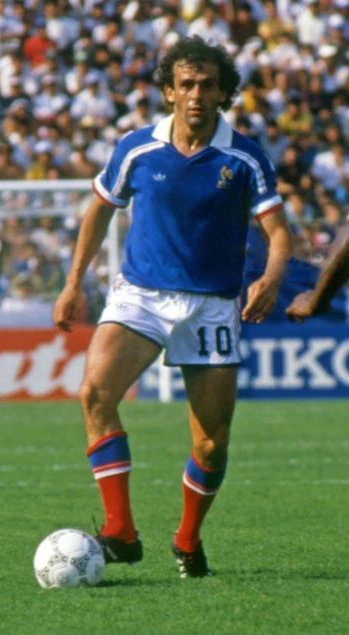
Who Michel Platini is and why that shapes the wealth picture
Born in 1955, Michel Platini played for Nancy, Saint-Étienne, and most prominently Juventus before retiring from football in 1987. He earned 72 caps for France, captained the side 49 times, and scored 41 international goals, making him France's all-time leading scorer at the time of his retirement. UEFA credits him with three consecutive Ballon d'Or titles in 1983, 1984, and 1985, which remains one of the sport's most remarkable individual runs. He was the leading scorer when France won Euro 1984 and was instrumental in the team's fourth-place finish at the 1982 World Cup. In short, Platini was unambiguously the best European footballer of his era.
Why does that matter for net worth? Because playing in the 1980s is the single biggest constraint on his wealth compared to modern players. Transfer fees in that era were measured in hundreds of thousands, not hundreds of millions. Weekly wages at Juventus in the early 1980s would be considered trivial by today's Serie A standards. There were no boot deals worth tens of millions and no image-rights megadeals. His playing career, impressive as it was, generated a fraction of what an equivalent player earns today. That baseline matters before we add anything else.
How net worth is actually calculated for someone like Platini
Net worth is assets minus liabilities. For athletes, the assets column typically includes accumulated career earnings (wages, signing fees, bonuses), endorsement and sponsorship income, property, investments, and business interests. The liabilities column includes mortgages, loans, taxes owed or paid, and any legal fines or settlements. For retired players who moved into administration, you also add post-career salaries, consulting fees, and any pension entitlements from governing bodies.
What gets excluded or flagged as uncertain: unverified business ventures, undisclosed property portfolios, family wealth that isn't the player's own, and any income or assets that exist behind private corporate structures. For Platini specifically, several income figures have entered the public record through court documents and FIFA ethics proceedings rather than voluntary disclosure, which actually makes some of his financial picture more traceable than most retired players, even if what it reveals is complicated.
The methodology used here follows the same logic applied to other retired European players: start with verifiable contract and salary information, apply era-appropriate adjustments, add documented post-career roles, then subtract documented liabilities and penalties. Estimates from aggregator sites like CelebrityNetWorth or CelebsMoney are treated as reference points only. CelebsMoney, for example, lists a range of $100,000 to $1 million for Platini as of 2026, which is almost certainly too low given his documented UEFA salary alone. Those sites rarely explain their methodology, which is reason enough to treat them as a starting point, not an answer.
Platini's net worth: the consolidated estimate and what drives it

The most defensible range for Michel Platini's net worth today is approximately $4 million to $12 million. Here is how the key income streams stack up:
| Income / Asset Stream | Estimated Contribution | Confidence Level |
|---|---|---|
| Playing career wages (Nancy, Saint-Étienne, Juventus) | Low-to-mid seven figures total over career | Medium — era contracts rarely disclosed fully |
| Endorsements and sponsorships during playing years | Modest by modern standards; estimated low seven figures cumulative | Low — no primary source confirmation |
| UEFA presidential salary (2007–2016) | Significant; multi-year executive-level remuneration | Medium-high — role documented, exact salary not fully public |
| FIFA advisory work (1998–2002) | CHF 300,000 annual salary per a 1999 contract (confirmed by CAS) | High — confirmed in legal proceedings |
| FIFA 2011 payment (2m Swiss francs) | Documented but legally contested; largely offset by tax and legal costs | High on receipt, unclear on net impact |
| Property and investment assets | Unknown; likely French residential property at minimum | Low — not publicly disclosed |
| Legal fines and costs | CHF 60,000 fine (CAS-reduced from CHF 80,000); substantial legal fees | High — documented in CAS and FIFA Ethics rulings |
The FIFA advisory salary is one of the cleaner data points. Court documents from the CAS proceedings confirm a written employment contract from 1999 at CHF 300,000 per year. That covers roughly 1999 to 2002, producing around CHF 1.2 million in documented salary from that role alone. The separate 2 million Swiss-franc payment in February 2011, which Platini described as unpaid additional salary from his 1998-2002 advisory period, was characterized by Sepp Blatter as a 'gentleman's agreement' and was ultimately the center of criminal and ethics proceedings. Three separate judging panels, including CAS, concluded there was no valid verbal contract or written agreement for backdated salary justifying that payment. From a net-worth perspective, that payment was received, but tax obligations and legal proceedings complicate how much of it translated to lasting wealth.
What Platini earned after hanging up his boots
Platini's post-playing career was, for many years, where the real money came from. After retiring in 1987, he took on increasingly senior roles in football governance. He served as technical director of the French national team around the 1998 World Cup, then as FIFA presidential adviser, and ultimately as UEFA president from 2007 to 2016, a role that UEFA documents confirm. Executive salaries at UEFA at presidential level are not disclosed in full, but the organization's size, revenue, and governance structure make it reasonable to estimate a multi-year package in the high hundreds of thousands to low millions of Swiss francs per year over his tenure.
That post-career income stream is what separates Platini's wealth trajectory from most retired players of his generation. A Juventus midfielder from the 1980s who went straight into retirement would have far less accumulated wealth than one who spent nearly two decades in well-compensated administrative and advisory roles. By the time his UEFA presidency ended in 2016 (he resigned following the FIFA ethics proceedings), Platini had accumulated roughly 17 years of post-playing executive income on top of his playing career earnings. That is the primary reason even conservative estimates of his net worth land in the multi-million dollar range rather than the near-zero estimates some low-quality sites publish.
Media and consulting work is harder to quantify. Platini has appeared in football media contexts and spoken at events, but there is no documented ongoing consulting contract or media retainer in the public record since his ban was imposed. Any income from these sources post-2016 should be treated as unverifiable and not included in a defensible base estimate.
Assets, liabilities, and how to think about his wealth realistically

Property is almost certainly part of Platini's asset base. French public records are not transparent enough to confirm specific holdings, but a person of his career profile and earnings history living in France for decades would typically hold residential real estate. Whether that extends to investment properties is unknown. No public disclosure places specific valuations on any Platini-owned properties.
The liabilities side of the ledger is more traceable than usual because of the legal proceedings. The FIFA Ethics Committee originally imposed a CHF 80,000 fine and an eight-year ban in December 2015. CAS subsequently reduced the fine to CHF 60,000 and the ban to four years. Beyond the fine itself, Platini would have incurred substantial legal costs across multiple proceedings, including the CAS appeal, Swiss criminal proceedings, and trial and appeal processes that extended into at least 2025 based on AP reporting. These costs are not publicly itemized, but multi-year international arbitration and criminal defense easily runs into hundreds of thousands of Swiss francs in legal fees, which directly reduces net wealth.
Age is also a financial variable. Platini is now 70 years old. Passive income from investments, pension entitlements (if any from UEFA or FIFA), and any real estate income are the realistic ongoing wealth contributors at this stage. Active advisory or media earnings are possible but unconfirmed. The wealth position is essentially static or slowly declining unless undisclosed investment income offsets costs of living and legal obligations.
How reliable are the numbers you find online
This is where most searches for 'Michel Platini net worth' go wrong. Several patterns of misinformation are worth flagging directly.
- Inflated figures based on modern player salaries: Some sites appear to reverse-engineer Platini's wealth using current Serie A or Premier League salary benchmarks, which are completely irrelevant to a player who retired in 1987. Applying today's Juventus wage bill to an 80s career produces a fictional number.
- The $2 million FIFA payment treated as pure wealth: That 2 million Swiss-franc payment is real and documented, but it was received in 2011, was subject to tax in France, and has been at the center of years of legal proceedings. Treating it as clean, intact wealth available today is misleading.
- CelebsMoney and similar aggregators: The $100,000 to $1 million range published there for 2026 is almost certainly too low. These sites apply algorithmic estimates with no access to contract data or administrative salary records. Their figures can be off by an order of magnitude in either direction.
- Unattributed 'highest paid' claims: At least one site labels Platini as among the 'highest-paid' footballers for 2026. He is retired and banned from football administration. This is editorial noise, not financial reporting.
- Forbes as a credibility proxy: Platini does not appear on any Forbes celebrity or billionaire wealth list, which is consistent with a multi-million but not billionaire-level net worth. Forbes published methodology for its lists is a useful benchmark: if someone isn't on Forbes, their wealth is almost certainly below the relevant threshold.
To verify figures, look for claims that trace back to primary sources: court documents, official organization disclosures, or credible journalism from outlets like AP, ESPN, The Guardian, or Le Monde. The CAS sentence document (Sentence 4474, publicly available through the TAS-CAS website) is one of the few primary sources that confirms specific income figures for Platini with legal authority behind them. Any estimate that doesn't account for the legal and financial complications of the post-2015 period is incomplete.
Where Platini sits relative to other players and football executives
Comparisons are useful for context but can mislead quickly if the framing isn't right. Platini is a retired 1980s player who also had a long administrative career, which is a very different wealth profile from a player who spent the 2010s in the Premier League or La Liga. Patrick Vieira's net worth offers a more recent reference point: a player from a later era with overlapping French footballing identity, but whose earnings reflect the post-Bosman, post-Champions League-money landscape. The wealth gap between Platini's generation and Vieira's is substantial, not because of different talent levels, but because the football economy changed structurally between the 1980s and 2000s.
Among football executives and administrators, the relevant comparison is less about playing income and more about governance-level salaries. UEFA's revenue grew dramatically during Platini's tenure (2007-2016), and executive compensation at that level in European football can be substantial. Even so, executive wealth in football administration is generally not comparable to the ownership and equity-level wealth of club owners. Paris Saint-Germain's net worth as a club dwarfs what any individual administrator accumulates through salary, which illustrates the difference in wealth scale between governance roles and club ownership. If you are also looking at an owner-level figure like Paris FC owner net worth, it helps to separate club-ownership equity from administrator salary.
Within his cohort of 1980s European stars turned administrators, Platini's estimated wealth is plausible and consistent. He is not at the billionaire level of some club owners, not at the $100 million-plus level of elite modern players, but comfortably in the multi-million range that reflects a long, well-compensated career across both playing and administrative phases of football.
How to check for updates and read new figures correctly
Platini's financial situation can still shift because legal proceedings have continued into 2025 and potentially beyond. Any ruling that results in additional fines, asset recovery orders, or changes to pension entitlements from UEFA or FIFA would update the net-worth picture. Here is how to stay on top of it:
- Check primary legal sources first: The TAS-CAS website publishes arbitration decisions. Any new CAS ruling involving Platini would appear there and would contain the most authoritative financial figures.
- Follow AP, ESPN, The Guardian, and Le Monde for court reporting: These outlets covered the Swiss criminal proceedings and appeals closely. New trial outcomes, acquittals, or penalty changes will be reported by these sources before reaching any net-worth aggregator.
- Discount any single-figure net-worth claim without a sourced breakdown: A number like '$60 million' or '$100,000' for Platini with no explanation of methodology should be treated as unreliable. A range with documented income streams and acknowledged exclusions is more credible than false precision.
- Look for any confirmed consulting or advisory engagements: If Platini re-enters football in any formal capacity, his income picture changes. His ban was time-limited; any documented return to paid football roles would be reported in specialist football media.
- Use this site's profile pages as a consolidated starting point: We update estimates when new credible information becomes available, and we flag when figures are based on estimates versus confirmed disclosures.
The bottom line is that Platini's net worth is real, multi-million in scale, and grounded in a combination of modest-by-modern-standards playing earnings and a long, well-paid administrative career that was disrupted rather than ended by the FIFA ethics proceedings. The $4 million to $12 million range reflects what credible sources support, acknowledges the legal and tax complications, and avoids the inflated or deflated figures that circulate on low-quality aggregator sites. If a number you find elsewhere is outside that range, ask what income streams are being included and whether those claims link back to a primary source. If you are comparing other French football figures with widely discussed finances, Patrice Evra net worth is another related option to review.
FAQ
Why do net worth estimates for Michel Platini vary so widely?
Because most published numbers either (a) include only playing-era earnings, which were modest in the 1980s, or (b) ignore the 2015 onward legal and tax impacts that affect what became lasting wealth. A defensible estimate needs both documented post-career compensation and documented liabilities, not just a single aggregate figure.
Does the 2011 Swiss-franc payment automatically increase Platini’s net worth in full?
Not automatically. While the payment itself was received, the net-worth effect depends on taxes, costs tied to the legal dispute, and whether any portion was recharacterized or treated as salary or disputed compensation. That is why two people can use the same gross figure but arrive at different net-worth outcomes.
Are penalty fines the only liability that matters, or can legal costs change the total?
Legal costs can be material. Even when the public record highlights the official fine reduction, multi-year CAS, Swiss proceedings, and defense work can significantly reduce net worth through attorneys’ fees and related expenses.
Do I need to include pension income in Michel Platini net worth calculations?
Only if it is documented or credibly reported. The article treats pension entitlements as uncertain, so a cautious calculation either leaves pension income out or models it as a smaller, scenario-based contributor rather than a guaranteed long-term asset.
What parts of Platini’s income are most likely to be missing from simple net worth websites?
Ongoing compensation is the usual gap. Media, speaking, or consulting income may exist but is often not supported by disclosed contracts, while those sites frequently present totals without separating verifiable salary history from unverified post-ban work.
If Platini’s income is harder to confirm after his UEFA presidency, how do analysts handle that uncertainty?
They typically exclude unverified post-2016 earnings and treat any possible income as optional, scenario-based rather than included in a baseline. That prevents inflating wealth using vague claims like “media deals” or “consulting” without contractual proof.
Could undisclosed investments or a private corporate structure change the net worth range?
Yes, but in a way that makes estimates less reliable. The article flags that private structures can hide asset ownership, so analysts keep the core range focused on verifiable earnings and documented liabilities, then treat any investment upside as an uncertainty rather than a confirmed adjustment.
Does Platini owning property, or having family wealth, automatically mean his net worth is higher?
Not automatically. Net worth calculations should reflect assets attributable to him personally. Without transparent property records, analysts should avoid assuming higher equity or mixing family holdings into personal net worth.
How does age affect Michel Platini net worth today?
Age changes the expected direction of wealth. At 70, the model shifts toward passive income from investments, potential pension income, and rental or other asset returns, while active earnings are less certain. Legal obligations can also remain a drag, so wealth may be roughly stable or slowly decline.
What is the most common mistake when people search “Michel Platini net worth”?
Using a single website number without checking what income streams it includes, whether it accounts for 2015 onward liabilities and taxes, or whether it relies on unsourced assumptions. A good check is whether the estimate mentions the documented salary and how it treats the legal proceedings.
Next Articles
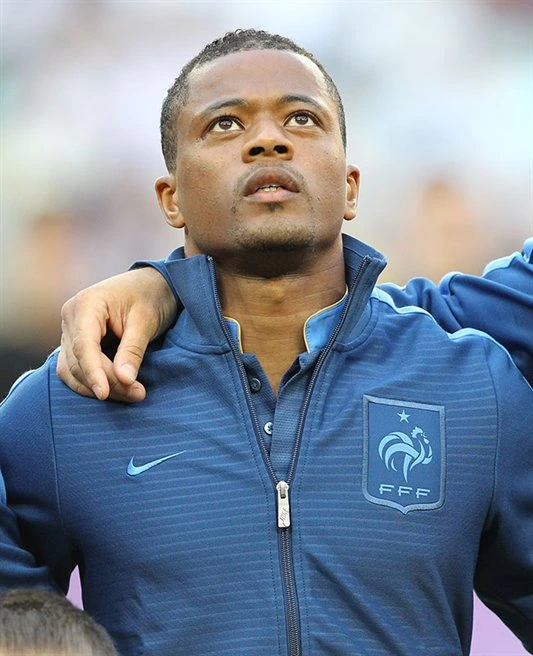
Patrice Evra Net Worth Today: Forbes vs Estimates and How It’s Calculated
Patrice Evra net worth today: compare Forbes vs estimates, see how player net worth is calculated, and verify the latest
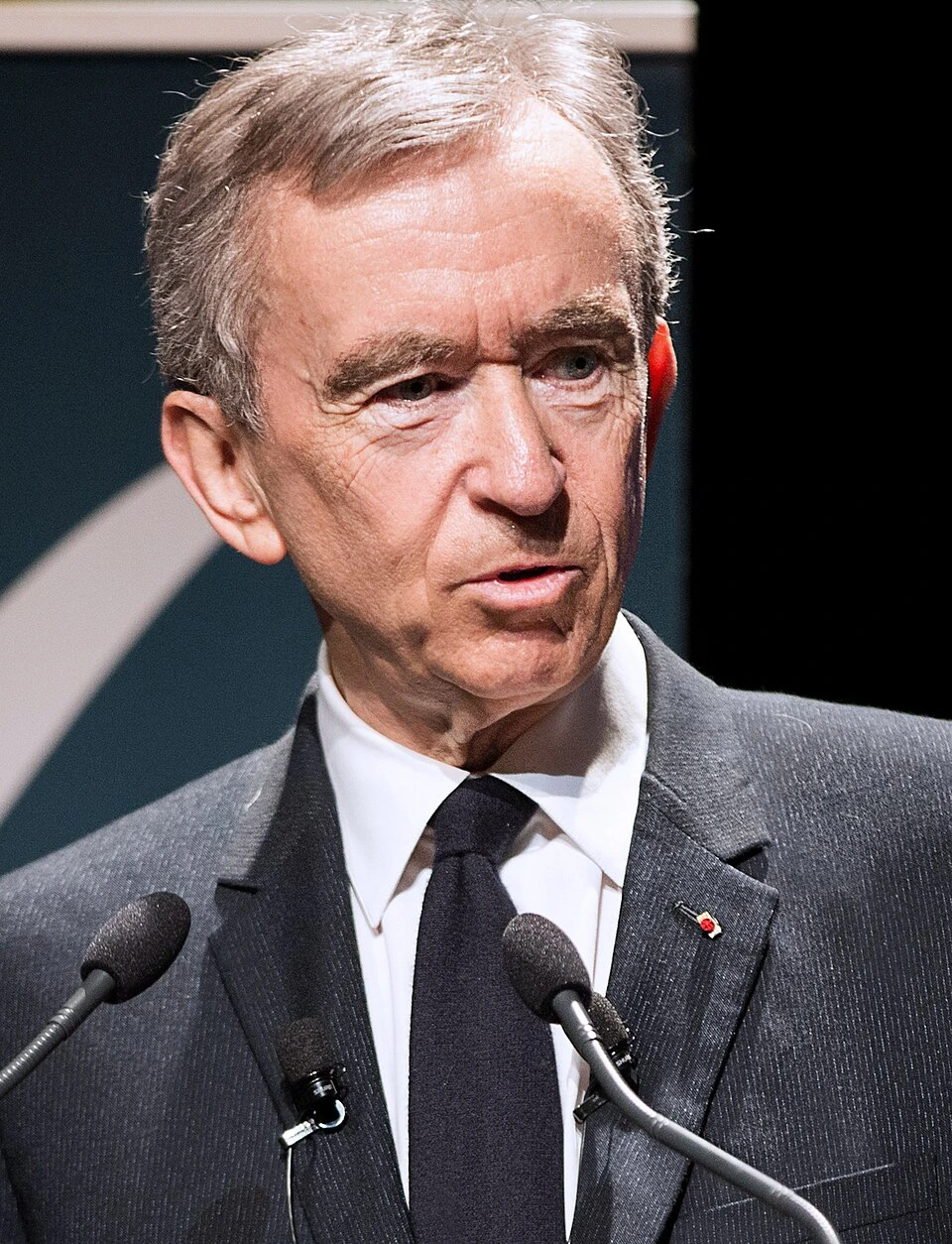
Paris FC Owner Net Worth: Owners, Valuation, and Estimates
Identify Paris FC owner(s) and estimate their net worth using filings and holdings, with clear confidence and what can’t

Napoli FC Net Worth Explained: Valuation, Debt, Owners
Napoli FC net worth breakdown: valuation vs equity, revenue, debt, wages, amortization, owners, and Serie A peer compari