
Paris Saint-Germain's net worth, in the most widely used sense, sits at roughly $4.6 billion as of 2025, based on Forbes' enterprise value model. That number refers to the club as a business organization, not to any individual behind it. If you've seen wildly different figures across different websites, it's almost certainly because some are estimating PSG the club's value while others are estimating the wealth of Qatar Sports Investments (QSI), the sovereign-backed entity that owns PSG. Those are two very different numbers, and confusing them is the source of most of the inconsistency you'll encounter.
Paris Saint-Germain Net Worth Explained: Club vs Owner Wealth

Marcus Rendell
27 Mar 2026

What 'PSG net worth' actually means

When someone searches for a football club's net worth, they're usually looking for one of two things: the total value of the club as an asset, or the personal wealth of the people who own it. For PSG, those two figures are not the same, and they're measured using completely different methodologies.
Club-level net worth is best understood as a valuation, not a traditional balance-sheet net worth. A standard net worth calculation (assets minus liabilities) works fine for individuals but gets messy fast with sports clubs, because the biggest asset, the brand and its earning potential, doesn't show up cleanly on a balance sheet. That's why most credible analysts, including Forbes, use an enterprise value framework instead. Think of enterprise value as what a buyer would realistically pay to acquire the club outright, accounting for both its equity and its debt obligations.
Owner net worth is a separate estimate entirely. It reflects the total personal or institutional wealth of the controlling party, which in PSG's case is a state-linked investment vehicle. The club's valuation is one component of that broader wealth picture, but it's not the whole story.
PSG's club valuation: how analysts get to $4.6 billion
Forbes' 2025 soccer team valuations placed PSG at $4.6 billion. That number uses what Forbes explicitly describes as an enterprise value framing: equity plus net debt. The exchange rates used were locked to May 17, 2024, so any euro/dollar fluctuation after that date isn't reflected in the published figure. This is important to keep in mind when you see the number quoted in different currencies or on different publication dates.
The reason Forbes and other serious valuation shops use enterprise value is straightforward: it's capital-structure neutral. As Forbes puts it, this approach allows for fair comparison between clubs that have very different debt loads and ownership arrangements. A club that carries significant debt would look artificially cheaper in a simple equity-only model. Enterprise value corrects for that, making cross-club comparisons more honest.
What actually drives PSG's valuation at that level? A few factors stand out. Revenue is the biggest one. For the 2024-25 season, PSG posted club-record revenue of approximately €837 million (close to $1 billion), according to AP reporting. That kind of top-line performance feeds directly into any valuation model because it signals how much the club can generate annually in broadcast rights, matchday income, commercial deals, and sponsorships. Add in PSG's Champions League title, its global brand recognition, the Paris market size, and ongoing stadium discussions, and you have a combination of factors that justifies a multi-billion dollar enterprise value.
The key revenue and value drivers in plain terms

- Broadcast and media rights: PSG's participation in Ligue 1 and UEFA competitions generates significant annual rights income, which anchors recurring revenue projections.
- Commercial and sponsorship revenue: The club's global fanbase and Paris brand attract premium sponsorship deals, contributing heavily to that ~€837M revenue figure.
- Matchday revenue: Parc des Princes capacity and potential stadium upgrade plans affect this line, and any new stadium development would likely push valuation higher.
- Player asset values: Transfer market activity can temporarily inflate or deflate perceived club value, though Forbes' model focuses more on sustainable revenue than squad cost.
- Brand equity: PSG has become one of the most recognized football clubs globally, which supports premium valuation multiples compared to clubs with smaller international footprints.
Who actually owns PSG and how their wealth is measured
PSG has been majority-owned by Qatar Sports Investments (QSI) since 2011. QSI is a subsidiary of Qatar Investment Authority (QIA), the sovereign wealth fund of the State of Qatar. This ownership structure matters enormously when estimating 'owner net worth' because you're not dealing with a single individual's personal fortune. You're dealing with a state-backed investment vehicle whose total assets run into the hundreds of billions of dollars.
Qatar Investment Authority manages an estimated $450 billion or more in assets across global investments, including real estate, equities, infrastructure, and sports. PSG represents one holding within that massive portfolio. Nasser Al-Khelaifi serves as chairman of PSG and president of QSI, making him the most visible individual figure associated with PSG's ownership. His personal net worth is sometimes quoted separately, typically in the range of several hundred million dollars, but that figure reflects his individual wealth rather than QIA's or Qatar's full sovereign resources.
This is where a lot of confusion enters the picture. Some sites quote 'PSG owner net worth' as a personal figure tied to Al-Khelaifi. Others try to roll the entire QIA asset base into the number. Neither framing is wrong exactly, but they're answering different questions. The honest answer is that PSG's ownership traces back to a sovereign wealth fund, not a typical billionaire owner, which makes the 'owner net worth' question structurally different from clubs owned by a private individual.
The ownership structure and why it complicates the estimate
Most elite football clubs owned by private individuals, think Roman Abramovich's era at Chelsea or Sheikh Mansour at Manchester City, allow for a reasonably clean link between 'owner' and 'owner net worth.' You can look up the individual, find credible wealth estimates from Forbes or Bloomberg, and make a connection. PSG's structure is more layered.
QSI sits between the club and QIA. QIA sits between QSI and the Qatari state. There is no single person whose personal balance sheet equals 'PSG's owner net worth. ' What you can say is that QIA, as the controlling entity behind QSI, represents one of the largest sovereign wealth funds in the world, and PSG is one of its sporting investments.
If you're trying to express 'PSG owner wealth' in a number, the QIA figure of $450B+ is the most defensible institutional estimate, while Al-Khelaifi's personal net worth, typically cited as a smaller executive-level figure, represents only his individual portion. Reuters is often used as a primary source for asset and ownership-structure claims, and its reporting is commonly relied on for frequently cited sovereign wealth AUM figures rather than blog aggregators [QIA figure of $450B+ is the most defensible institutional estimate](https://www.
reuters. com/).
Understanding this structure also changes how you interpret PSG's financial decisions. Unlike clubs where owner funding depends on a single individual's liquidity, PSG's access to capital is backed by a state's financial resources. That's part of why analysts assign a premium to PSG's valuation stability compared to clubs with more concentrated private ownership risk.
Why different sites show wildly different numbers

If you've searched around, you've likely found PSG 'net worth' estimates ranging from a few hundred million dollars to trillions. Here's what's actually happening.
- Different subjects: Some sites estimate the club value (Forbes' $4.6B). Others estimate Al-Khelaifi's personal wealth. Others try to express QIA's total assets. These are three completely different numbers.
- Different methodologies: Enterprise value, revenue multiples, book value, and social media-driven 'celebrity net worth' calculators all produce different outputs. The latter is the least credible for institutional entities.
- Different time stamps: PSG's valuation was $4.6B using May 2024 exchange rates in Forbes' 2025 publication. A site using 2022 data or different exchange rates will show a different figure.
- Currency conversion inconsistency: PSG operates primarily in euros. Converting to dollars at different points in time creates apparent discrepancies that have nothing to do with actual club value changes.
- Conflation of gross revenue with net worth: Some sites mistakenly describe PSG's annual revenue (~€837M) as its 'net worth.' Revenue and net worth or valuation are not the same thing.
The most credible and consistent benchmark you'll find is Forbes' annual soccer team valuations, which explicitly states its methodology and exchange-rate assumptions. That transparency is what separates it from most of the other numbers you'll see cited online. For owner-level wealth, Bloomberg Billionaires and Forbes' Billionaires list are the most consistently updated and methodology-transparent sources for individuals, though neither can fully capture sovereign wealth fund scale.
How to find credible, current PSG wealth data
A few practical steps will help you verify any PSG valuation or owner wealth figure you come across. First, check the source's publication date and methodology disclosure. Forbes publishes its soccer valuations annually, typically mid-year, and tells you exactly what exchange rates and model inputs were used. If a source doesn't disclose its methodology, treat the number as unreliable.
Second, check what entity is actually being valued. A site saying 'PSG net worth is $400 billion' is almost certainly grabbing QIA's total sovereign wealth fund assets, not PSG's club valuation. A site saying 'PSG net worth is $800M' may be working from outdated data or using a book-value approach rather than enterprise value. The $4.6B Forbes figure is your most defensible starting point for club valuation as of 2025.
Third, for executive and ownership wealth, look to Forbes Billionaires or Bloomberg Billionaires for any individuals involved in PSG's leadership. For QIA itself, the fund periodically releases public statements about its assets under management, which are the most authoritative institutional figures available, though full transparency is limited given its sovereign nature. Financial disclosures from PSG's UEFA and French football federation filings also provide revenue and cost data that underpins any credible valuation.
For historical context and player-level data, tracking how individual PSG figures have built wealth over time can round out your picture. Patrice Evra's net worth is a good example of how a PSG-connected player's career earnings translate into long-term personal wealth, illustrating the difference between club-level and individual financial trajectories. Similarly, Michel Platini's net worth shows how French football figures who helped build the sport's commercial value ended up with very different wealth profiles than the clubs they played for.
PSG club value vs. owner wealth at a glance
| What's being measured | Estimated figure | Methodology | Best source |
|---|---|---|---|
| PSG club valuation (enterprise value) | $4.6 billion (2025) | Enterprise value: equity + net debt, Forbes model | Forbes Soccer Team Valuations |
| PSG annual revenue (2024-25) | Club financial reporting, UEFA disclosures | UEFA / AP reporting | |
| Nasser Al-Khelaifi personal net worth | Several hundred million (estimated) | Executive compensation, shareholdings, public disclosures | Forbes / Bloomberg Billionaires |
| Qatar Investment Authority total assets | $450B+ (estimated) | Sovereign wealth fund public statements, IMF data | QIA disclosures, SWF Institute |
The bottom line: how to read PSG net worth correctly
If someone asks 'what is PSG's net worth?' and you want the most defensible, current answer, the right response is: the club is valued at approximately $4.6 billion as of Forbes' 2025 publication, using an enterprise value methodology. That is not the same as the personal wealth of anyone at PSG, and it is not the same as Qatar's sovereign wealth fund total.
For ownership wealth, the honest framing is that PSG is owned by a sovereign-backed institution, QIA through QSI, with resources that dwarf any single club valuation. You may also see estimates of Patrick Vieira net worth, but those figures refer to his personal wealth rather than PSG's club valuation. If you're looking for a specific individual's wealth, Nasser Al-Khelaifi is the relevant name, but his personal net worth figure is a fraction of QIA's institutional scale. Keeping those three levels clearly separate, club value, executive wealth, and sovereign fund assets, will help you read any PSG financial story with a critical eye and avoid the conflation that most clickbait net-worth articles rely on.
The broader Paris football landscape is worth understanding too. Paris FC's ownership and net worth offers a useful contrast to PSG's sovereign-backed model, showing how differently funded clubs in the same city operate at completely different financial scales.
FAQ
Does PSG’s $4.6 billion number mean the club is “worth” that amount in cash, and what exactly is included?
No. That figure is an enterprise value concept (equity value plus net debt). It is a valuation of what a buyer might pay for the club structure, not the amount PSG has in bank accounts or transfer fees, and it can move with debt assumptions and currency inputs.
If a website says “PSG owner net worth” and gives a huge number, how can I tell whether it is QIA or a person?
Look for whether the source references Qatar Investment Authority (QIA) or Qatar Sports Investments (QSI). If it mentions “sovereign wealth” or uses the scale of a global fund, it is likely rolling up institutional assets, not an individual executive’s fortune.
Why do PSG net worth estimates change from one currency or date to another even when the club fundamentals look similar?
Because valuations can be recalculated using fixed exchange-rate snapshots or updated model assumptions. The Forbes-style approach can lock rates to a specific day, so later euro to dollar swings can make the same underlying valuation appear higher or lower when quoted in USD or EUR.
Is it more accurate to compare PSG to other clubs using enterprise value or “assets minus liabilities”?
For cross-club comparisons, enterprise value is usually more consistent because it adjusts for different debt loads. Simple balance-sheet style net worth can mislead for clubs with very different capital structures, so comparisons by “equity only” can look unfair.
Can I use PSG’s revenue or stadium plans to independently estimate a more current valuation than the published number?
You can approximate directionally, but you need a model that converts revenue into earnings, then applies a discount rate and a multiple. Without those inputs, it is easy to overstate. A practical approach is to update revenue first, then apply the same enterprise-value framework assumptions as the original methodology.
Does QSI or QIA “own” PSG in the same way a private billionaire owns a club?
Not really. With layered ownership, the club’s controller is an institutional investment vehicle rather than a single person’s balance sheet. That means “owner net worth” questions are more about scale of backing and capital access than about one individual’s liquid wealth.
Who should I look up if I specifically want the personal wealth tied to PSG leadership?
Nasser Al-Khelaifi is the most visible individual associated with PSG’s ownership. But his personal net worth is not the same thing as PSG’s enterprise value or QIA’s assets, so you should treat it as an executive-level estimate only.
How reliable are “net worth” numbers that do not state a methodology?
If a source does not explain whether it is valuing the club, the owner entity, or the sovereign fund, the number is often not comparable to credible enterprise-value valuations. In practice, treat undisclosed methodology figures as entertainment or as a guess.
Why do PSG valuations sometimes appear to contradict other financial statements or reported spending?
Valuation is forward-looking and capital-structure neutral, while spending figures are cash flows and operating decisions in a given period. A club can invest heavily and still have a stable valuation if the revenue engine and competitive positioning support expected future earnings.
If I want the best “current” PSG figure, what should I check first: valuation, revenue, or owner assets?
Start with the valuation source and its date for club-level worth, then validate the underlying performance using the most recent revenue and cost reporting. For “owner wealth,” treat QIA scale estimates separately, because they answer a different question than club valuation.
Next Articles

Patrick Vieira Net Worth: Estimate, Sources, and Career Earnings
Patrick Vieira net worth estimate with range, salary and coaching earnings breakdown, methodology, and how to verify upd
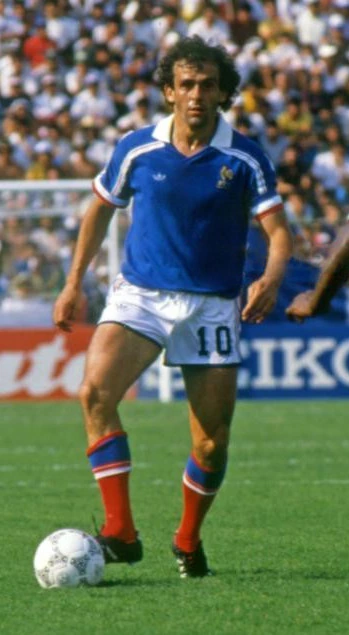
Michel Platini Net Worth: Estimate, Income Sources, and How It’s Calculated
Michel Platini net worth estimate with income sources, calculation method, what’s included or uncertain, and how to veri

Patrice Evra Net Worth Today: Forbes vs Estimates and How It’s Calculated
Patrice Evra net worth today: compare Forbes vs estimates, see how player net worth is calculated, and verify the latest