
As of April 2026, Cristiano Ronaldo is the highest net worth soccer player according to the most widely cited estimates. Bloomberg pegged his net worth at approximately $1.4 billion, and CelebrityNetWorth lists him at $1.2 billion. Either figure puts him comfortably ahead of every other current or retired professional soccer player tracked by major wealth-monitoring sources. But getting to that answer is only half the job. Understanding what it means, how those estimates are built, and why the highest-paid player in a given year is not always the wealthiest is what actually makes the number useful.
Highest Net Worth Soccer Player: How to Verify It Fast

Marcus Rendell
10 Apr 2026

Net worth vs. highest-paid: they are not the same thing

This is the single most common point of confusion when people search for the richest players in the sport. Net worth is a snapshot of total accumulated wealth: assets (cash, real estate, equity stakes, brand deals structured as business holdings, and investments) minus liabilities. It is not what a player earned last year. Highest-paid, by contrast, is an income figure covering a defined time window, typically 12 months. Forbes, for example, tracks income "between May 1, 2024, and May 1, 2025" and counts salary, bonuses, prize money, and endorsement income within that window.
A player can top the highest-paid list for a single season without being the wealthiest player overall, because high annual income does not automatically translate into accumulated wealth. Taxes, spending habits, poor investments, and short careers all erode earnings. Conversely, a retired player who earned well, invested wisely, and built business interests over decades can hold a significantly higher net worth than the current league salary leader. When secondary media outlets write headlines like "Ronaldo tops Forbes list with an estimated net worth of..." they are often blending two separate measurements, which is worth keeping in mind as you read around.
How to find the top-ranked player on a net worth tracking site
If you want to get the answer fast, here is the most efficient workflow. Start on a dedicated sports wealth reference site (like this one) rather than a general search engine results page, because aggregated player profiles allow you to filter by sport, status (current vs. retired), and role (player vs. coach vs. executive). Look for a ranked list or leaderboard rather than individual player pages, since individual pages do not always show context relative to peers.
Once you are on the right page, use whatever filters are available. Current players and retired players often appear on separate lists because retired players' wealth has had more time to compound through investments, while active players may still be in peak earning years but with less accumulated capital. If the site mixes both groups, check whether the ranking is explicit about that. You can browse net worth data for soccer players on this site to see how current and retired athletes stack up side by side, which is a good starting point for orienting yourself before diving into individual profiles.
Once you identify the top name, click through to the individual profile to check the estimate date, the components included, and any caveats noted. A good profile will tell you approximately when the estimate was last updated and what major income or asset streams were factored in.
How to read net worth estimates and actually trust them

Not all net worth estimates are created equal, and the methodology behind them matters a lot. Forbes is the gold standard for transparency: for its wealth lists, Forbes models net worth using asset valuations, applies liquidity discounts to private holdings, and publishes estimates as of a specific cutoff date. Forbes also notes that its [Real-Time Billionaires holdings are updated every 5 minutes](https://www. forbes.
com/real-time-billionaires/) when markets are open, with a 15-minute price delay, and that net worth tied to private companies is updated once a day. That is an important detail. An estimate tied to "September 1, 2025" reflects asset values at that moment, not now. Markets move, contracts expire, and business valuations shift.
Any figure you read today may be six to eighteen months old.
CelebrityNetWorth uses a proprietary algorithm based on publicly available information and positions its figures as entertainment-grade estimates rather than audited financial statements. Its Ronaldo page, for instance, shows a calculation line that discounts certain components (something like multiplying a base figure by a factor well below 1.0) rather than simply summing all known income. That approach is more honest than it might look at first glance, because raw contract totals overstate actual wealth before taxes, agent fees, and expenses. But the algorithm itself is not fully transparent, so treat those figures as directional rather than precise.
Sites like TheRichest publish per-player net worth pages for soccer players, but they typically do not explain their methodology in detail. They are useful for a rough orientation but should be cross-referenced against a more transparent source before you cite them. The safest habit is to look for at least two sources that roughly agree, and note the date each estimate was last updated. When you see a figure from a credible reference like a ranked breakdown of the richest soccer players by net worth, check whether the underlying estimates align with what Bloomberg or Forbes have reported for the same players.
What actually builds net worth in soccer
Soccer wealth comes from several streams, and the mix matters as much as the total. Here is how the major components work in practice.
- Base salary and wages: The most visible component. Top players at elite clubs or in high-spending leagues (like the Saudi Pro League) earn annual wages that can exceed $100 million per year. This is what most "highest-paid" rankings are primarily measuring.
- Performance bonuses: Title bonuses, appearance bonuses, and Champions League milestone payments can add tens of millions on top of base wages in a strong season, but they are variable and often not made public in full.
- Endorsement and sponsorship income: For players at the very top, brand deals often rival or exceed playing wages. Ronaldo's Nike deal and broader sponsorship portfolio are consistently cited alongside his salary as a primary driver of his annual income, which Forbes and Sportico both confirmed put him at approximately $260 million in total 2025 earnings.
- Image rights: Some players structure image rights payments separately from wages, often through personal holding companies. This has tax advantages in certain jurisdictions and also means some income does not show up in publicly reported salary figures.
- Investments and business equity: Real estate, restaurant chains, clothing brands, equity stakes in tech companies, and co-ownership positions in sports teams all contribute to net worth without appearing in any earnings ranking.
- Club-based subsidies and league incentives: In some cases, player wages are partly subsidized by league commercial funds or club sponsors, which can inflate reported earnings figures relative to what the club itself is paying.
Bloomberg's reporting on Ronaldo's billionaire status specifically highlighted his Nike deal, broader sponsorships, and real estate holdings as the multi-stream combination that pushed his net worth past $1 billion. That is a useful template for understanding any top player's wealth: it is almost never just the salary.
Why the highest-paid player often is not the wealthiest

Sportico's 2025 highest-paid athletes list put Ronaldo at $260 million in total earnings for the year, making him the top-earning soccer player by income. He also happens to be the highest net worth player. But that alignment is unusual. The highest-paid player in a given season is typically a current, peak-age athlete with a massive active contract. Net worth, though, rewards longevity, frugality, smart investing, and business building, none of which necessarily correlate with being the highest earner in one particular 12-month window.
Consider a player who spent 15 years at a top club earning moderate wages, invested in real estate across multiple cities, and built a business portfolio after retiring. That player's net worth might easily exceed a current superstar who earns more annually but carries significant lifestyle costs and has not yet diversified into non-playing income. For deep historical context, Pelé's net worth story is a striking example of how fame does not always translate into lasting financial wealth, especially for players from earlier eras who lacked the endorsement infrastructure that exists today.
Earnings lists also mix modeled inputs rather than audited data. Some use a combination of reported contract figures and projected figures for deals still being negotiated. That means a player on a new, ballyhooed deal might appear higher on an earnings list than their actual deposited income for the year would justify.
Comparing rankings over time: current vs. retired, currency, and year-to-year shifts
Rankings change, and not always because a player's real-world wealth changed. Several technical factors affect how a net worth estimate moves year to year.
| Factor | What changes | Why it matters |
|---|---|---|
| Estimate cutoff date | Different sites use different reference dates | An estimate from mid-2024 and one from early 2026 reflect different market conditions |
| Currency conversion | Exchange rates between USD, EUR, GBP, SAR fluctuate significantly | A player paid in Saudi riyals or euros looks richer or poorer in USD depending on the conversion date used |
| Active vs. retired status | Retired players' wealth may compound through investments; active players gain salary but also spend more | Comparing a retired legend with a current player requires adjusting for career stage |
| Tax and expense assumptions | Different estimators use different assumptions about effective tax rates and spending | A $500M gross earnings estimate might produce a $200M or $350M net worth depending on the model |
| Business valuation changes | Private holdings are valued using multiples that shift with market conditions | A restaurant chain or clothing brand valued at $80M one year might be worth $50M or $120M the next |
When you are comparing a player's net worth across years, the most useful approach is to stick to one source for the comparison rather than mixing figures from different outlets. If you use Forbes in 2024 and CelebrityNetWorth in 2026, you are comparing different methodologies, not just different time periods. For players in non-dollar markets, also check whether the reporting outlet converted at the spot rate or used an average exchange rate for the period.
For players like Bruno Fernandes, whose career earnings are denominated partly in British pounds and partly through Portuguese club history, year-to-year net worth shifts can reflect currency movements as much as actual wealth changes. The same principle applies to goalkeepers and other less-highlighted positions. A profile like that of goalkeeper Bruno illustrates how positional hierarchy in salary structures means the wealth gap between a top-10 net worth player and someone outside the headline names can be substantial even within the same club.
What to do when the numbers conflict
If you search for the highest net worth soccer player and get three different figures from three different sources, that is normal, not a sign that the data is broken. Here is a practical approach to resolving conflicts.
- Check the estimate date on each source. If one figure is from 2023 and another is from early 2026, they are not contradicting each other, they are just measuring different moments.
- Identify whether each source is measuring net worth (assets minus liabilities) or annual earnings. Many conflicts dissolve once you realize two sources are answering different questions.
- Prefer sources that describe their methodology explicitly. Forbes, Bloomberg, and Sportico all explain at least some of how their numbers are built. Proprietary-algorithm sites are less transparent and should be weighted accordingly.
- Look for convergence. If Bloomberg says $1.4 billion and CelebrityNetWorth says $1.2 billion, those figures are roughly consistent given their different methodologies and cutoff dates. If one source says $500 million and another says $2 billion for the same player, dig into why before citing either figure.
- Use this site's profiles as a starting reference and note the most recently updated estimate date. Then cross-reference with a major financial publication for the same player to triangulate.
- If results still conflict, report both figures with their source and date. Honest uncertainty is more useful than false precision.
It is also worth noting that wealth ranking is not unique to soccer. If you have ever looked at net worth data for MotoGP riders, you will recognize the same patterns: a mix of salary, endorsements, and business interests, with widely varying estimate quality across sources. The habits that make you a careful reader of soccer wealth data transfer directly to any other sport.
Where this leaves you right now

As of April 2026, the practical answer is: Cristiano Ronaldo is the highest net worth soccer player by a significant margin, with credible estimates ranging from $1.2 billion to $1.4 billion depending on the source and methodology. That wealth comes from a combination of three-plus decades of elite wages, a massive global endorsement portfolio (led by Nike), image rights structured as business income, and a diversified investment base including real estate and personal brands. He is also the top earner on recent highest-paid lists, which makes him something of a rare case where both rankings align, but that alignment is not the norm across the sport.
To verify this for yourself, start with a ranked reference list of player wealth, filter for the broadest possible pool (current and retired, all positions), and check whether the top result includes an estimate date and a methodology note. Then cross-check against at least one major financial publication. If you want to go deeper into how wealth is distributed across the professional game more broadly, a full breakdown of the richest soccer players by net worth is a good next read, as it puts individual rankings into the broader context of how soccer wealth is actually distributed across tiers of the sport.
FAQ
If I find different sites claiming different “highest net worth soccer player,” which one should I trust first?
Start with the source that explicitly states an estimate cutoff date and describes how it treats private holdings (liquidity discounts, valuation assumptions, or modeled inputs). Then, cross-check with one other outlet that uses a clearly stated methodology, not just a single “headline” number.
How can I tell whether an estimate includes endorsement and image-rights deals versus only salary?
Look for a methodology section that lists income streams as categories, for example endorsements, sponsorships, brand licensing, or business interests. If the page only references contract totals or career earnings, treat it as incomplete for net worth.
Why does a player sometimes appear higher on an “earnings” list than on a “net worth” list (or the reverse)?
Earnings lists reflect income in a specific window, while net worth reflects accumulated assets net of liabilities. A player with high short-term income can rank lower if spending, taxes, and agent fees consume most of it, while a retired player can rank higher due to compounding investments and business ownership.
When comparing net worth across years, what’s the fastest way to avoid getting tricked by exchange rates?
Use one source for both years, and check whether it reports in the local currency and converts to USD using a spot rate or an average rate for the period. If the conversion method is not stated, avoid precise “growth” comparisons.
What’s the most common mistake people make when using net worth numbers as if they were audited facts?
Treating estimates as exact. Many sites use modeled valuations for private companies, equity stakes, and business income. The practical approach is to use net worth for direction and relative ranking, not for exact accounting.
Why do some sites show extremely precise-looking figures but give no real “how they calculated it” details?
Precision can be formatting, not accuracy. If a site does not explain valuation assumptions, discounts, or the treatment of liabilities, the number may be derived from broad public signals and then converted into a seemingly exact total.
How should I interpret the estimate update date when I see a “as of” month or year?
Use it as the valuation timing. A figure labeled “as of September 1, 2025” is anchored to asset values and deal terms around that time, not today. If the number feels out of date, prioritize more recently updated profiles or the latest cutoff figures from the same outlet.
Is it safe to say the “highest net worth soccer player” is always the same as the “highest-paid player right now”?
No. It happens occasionally for certain rare cases, but it is not the norm. Highest-paid usually tracks current contracts and a narrow time window, while net worth rewards longevity, investment behavior, and diversification beyond wages.
If two major sources disagree by a wide margin, how do I reconcile it quickly?
Compare not the final number first, but the inputs. Check whether they differ on (1) valuation of private assets or equity, (2) treatment of taxes and agent fees, (3) whether brand deals are modeled as business income, and (4) the estimate cutoff date.
Do goalkeeper, defender, or other non-headline players get underrepresented in these rankings?
Rankings can look “top-heavy” because salary structures and visibility differ by position and role. To avoid missing meaningful gaps, sort by net worth using a broad filter (all positions, current and retired) and then examine how the outlet defines categories for less prominent players.
Next Articles

Richest Soccer Players Net Worth: Who Leads and How It’s Estimated
Ranked richest soccer players, reported net worth ranges, and how reliable estimates track earnings, endorsements, and a

Net Worth Soccer Players: How to Estimate Reliably
Step-by-step way to estimate net worth for soccer players, verify sources, and compare earnings beyond salary rumors
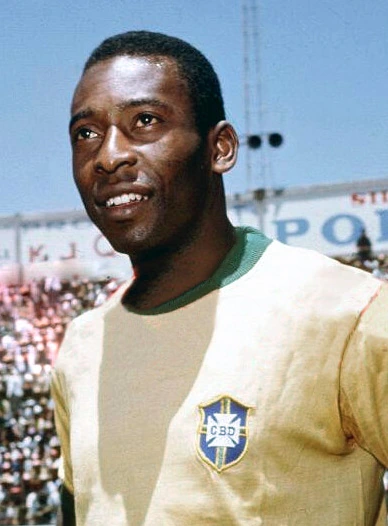
Pele Soccer Player Net Worth: What It Includes and How to Verify
Pelé net worth breakdown: career earnings, endorsements, media, business income, and steps to verify credible estimates.