
Net worth figures for soccer players are everywhere online, but most of them are poorly sourced, outdated, or just plain wrong. If you want a number you can actually trust, you need to understand what "net worth" really means in this context, where the data comes from, and how to cross-check it yourself. This guide walks you through all of that, step by step.
Net Worth Soccer Players: How to Estimate Reliably

Marcus Rendell
5 Apr 2026

What "net worth" actually means for a soccer player

Net worth is simple in theory: assets minus liabilities. Whatever a player owns (cash, property, business stakes, investments) minus whatever they owe (mortgages, loans, taxes due) gives you their net worth. Forbes Advisor's net worth framework puts it well: the key is estimating what those assets would actually be worth if sold today, not what someone paid for them originally.
For soccer players, the assets side typically includes accumulated savings from career salaries, real estate holdings, equity stakes in businesses or clubs, brand and licensing deals, and investment portfolios. The liabilities side includes mortgages, personal loans, and outstanding tax obligations. What net worth is NOT is a player's annual salary, their gross contract value, or a rough guess based on their most famous transfer fee. Those are all common confusions we'll get to later.
One more thing worth flagging early: net worth is an estimate, almost always. Even for the wealthiest players, exact financial details aren't public. What you're reading on any reference site, including this one, is a best-estimate figure built from available data, not an audited balance sheet.
How soccer players actually make their money
Understanding net worth starts with understanding the income streams that build it. Soccer player wealth comes from several distinct channels, and they don't all carry equal weight across every player's career.
Salary and contract compensation
Base salary is the foundation. But as Deloitte's Football Money League methodology makes clear, "wage costs" at the club level are more complex than a simple salary figure: they include signing-on fees, bonuses, termination payments, social security contributions, and other employee benefits. So when you see a reported salary figure, it may or may not bundle those extras. For MLS specifically, the Players Association defines "Average Annual Guaranteed Compensation" as base salary plus annualized signing bonus and marketing bonus, but it explicitly excludes performance bonuses because those aren't guaranteed. Lionel Messi's publicly reported MLS compensation illustrates this nicely: his annualized figure was listed as roughly $20.4 million total guaranteed, built on a $12 million base salary plus marketing bonuses and agent fees, but that number didn't capture performance bonuses or separate agreements with affiliates.
Endorsements and image rights

For top-tier players, endorsement income can rival or exceed their playing salary. Forbes tracks this component in their highest-paid athletes list as sponsorship deals, appearance fees, and memorabilia or licensing income over a defined 12-month window. Critically, Forbes explicitly excludes investment income like interest or dividends from that off-field total, even though those earnings may also be significant. Image rights are a related but distinct category: many European players (particularly in the Premier League and La Liga) route a portion of their earnings through personal image rights companies, which can change how income is taxed and reported. That structure makes it harder to pin down exact income figures from public filings.
Business stakes, investments, and post-career income
Longer-term wealth often comes from what players do with earnings during their career: real estate portfolios, equity in startups or established companies, restaurant chains, clothing brands, and increasingly, stakes in sports franchises. Forbes' broader wealth methodology treats these stakes as assets and applies liquidity discounts when companies are private, since a 10% stake in a private business isn't the same as cash in hand. For retired players, these investments often become the primary driver of ongoing net worth, since playing income has stopped.
Where the numbers on a reference site come from
When you look up a player's net worth on a site like this one, the figure you see is built from a combination of public and proprietary sources, cross-referenced and triangulated. Here's what that actually means in practice.
Salary data comes from sources like players' union disclosures (the MLS Players Association publishes a salary guide listing compensation for players under contract), club financial filings in jurisdictions that require them (Spanish clubs, for example, publish wage bills), and investigative reporting. Forbes builds its highest-paid lists from a tracking window (May 1 to May 1 for annual editions) using industry conversations and insider inputs. RBC Wealth Management similarly combines proprietary financial data with publicly reported sources for athlete earnings.
Transfer fee data often comes from Transfermarkt, which is partly community-curated: users can propose corrections to profile data including contract details and transfer history through the site's data administration workflow. That makes Transfermarkt useful but not infallible. A peer-reviewed econometric study found that Transfermarkt market values can be biased and may underestimate true transfer fees, and the platform's own methodology distinguishes between out-of-contract valuations and actual paid fees. Use it as a reference point, not a definitive source.
On this site, the editorial approach is to aggregate from credible sources, flag when figures are estimates rather than confirmed, and avoid amplifying unsubstantiated rumors. That's the same standard you should apply when evaluating any net worth figure you encounter elsewhere.
How to estimate or verify a specific player's net worth

Here's a practical workflow you can actually use. It won't give you an exact figure (nothing will), but it will give you a well-grounded range and tell you how much confidence to attach to it.
- Start with career earnings: Find salary data from union disclosures, club filings, or credible sports journalism. For MLS players, the MLSPA salary guide is a direct source. For European leagues, investigative outlets and club annual reports are your best bet. Multiply confirmed annual salaries by the years at each club to get a rough career gross earnings figure.
- Adjust for taxes and fees: Gross career earnings overstate actual wealth significantly. High earners in the UK face a 45% income tax rate on earnings above £125,140. Spanish players historically paid under the "Beckham Law" at a flat 24% for a limited period, then standard rates afterward. Subtract estimated agent fees (typically 3–10% of contract value) and lifestyle costs. These reductions can cut the gross figure by 40–60%.
- Find endorsement income: Check Forbes' highest-paid athletes lists for any year the player appeared. Their off-field earnings figure covers sponsorships, appearances, and licensing for that 12-month window. For players not on Forbes' radar, look for confirmed sponsorship announcements in sports business media.
- Identify business assets and investments: Sports business reporting and company registration databases (Companies House in the UK, for example) can show whether a player holds directorships or equity stakes in businesses. Real estate holdings sometimes appear in property records depending on jurisdiction.
- Check Transfermarkt for historical transfer context: Transfer fees paid for a player are not the player's income, but they signal earning power and may correlate with salary level. Remember the caveats about Transfermarkt's methodology.
- Cross-reference against published estimates: Look at two or three separate reference sources for the player. If estimates cluster in a similar range, that's a reasonable signal of reliability. If estimates vary wildly, treat the midpoint conservatively and note the uncertainty.
- Account for liabilities: Mortgages on known property holdings, any reported financial disputes or legal judgments, and estimated ongoing lifestyle costs. Net worth only means something if liabilities are subtracted.
This process won't produce a precise number, but it produces a defensible estimate with a clear methodology, which is exactly what a responsible reference site should be doing.
Net worth looks very different depending on role and career stage
Not every profile on a soccer reference site is an active outfield player with a mega-contract. Coaches, club executives, and retired players all have different wealth profiles, and understanding those differences matters when you're comparing figures.
Current players
An active player at a top club is in peak earning mode. Salary, bonuses, and endorsement deals are all live simultaneously. Net worth is growing rapidly if managed well, but gross-to-net conversion is still brutal given tax rates and fees. A player earning $20 million a year gross in a high-tax jurisdiction may be accumulating $8–10 million in net wealth annually after all deductions, not the headline number.
Retired players
For retired players, net worth reflects what was accumulated and retained during the playing career, plus any post-career income from business ventures, coaching, media, or investment returns. Legends who played in eras before the current salary boom often have net worth figures that look modest compared to today's players despite legendary careers. Pelé's net worth is a good example of this dynamic: his career earnings came during an era of far lower transfer fees and salaries, so his wealth was built more through commercial ventures and endorsements than raw playing income.
Coaches and club executives
Coaching is a salaried profession in a labor-market framework rather than a contract-and-endorsement wealth machine. The U.S. Bureau of Labor Statistics tracks median annual wages for coaches and scouts, and even at the elite end, coaching salaries are substantially lower than top player contracts, unless the coach is someone like Pep Guardiola or Carlo Ancelotti with rare global status. Club executives (sporting directors, CEOs) are typically compensated on executive pay scales, often disclosed in club annual reports for publicly listed clubs. For a site covering this space, executive compensation data requires a different sourcing approach than player salary data.
The big picture: who earns most and why
Looking at the richest soccer players by net worth reveals clear patterns about what drives wealth at the top of the sport. It's not just individual talent: league economics, country of play, and club revenue all shape how much a player can earn.
League and country effects
Deloitte's Football Money League tracks club revenue across matchday, broadcast, and commercial streams. The Premier League's central broadcast and sponsorship revenue distribution illustrates how massive the underlying economics are: approximately 68% of nearly $3.9 billion in central revenue was distributed equally across the 20 Premier League clubs in 2024/25 alone. That revenue base is what makes Premier League wages possible. Deloitte has also noted that Premier League wages-to-revenue reached a record roughly 70%, meaning clubs are paying out the vast majority of revenue as player compensation. Saudi Pro League clubs, backed by sovereign wealth, operate outside normal revenue constraints entirely, which is why transfer offers from that league have been at levels traditional revenue models couldn't justify.
Club wealth versus player wealth
There's an important distinction between a club's financial valuation and what individual players at that club earn. Real Madrid being atop the Deloitte Football Money League doesn't mean every Real Madrid player is in the top tier of earner personally. Club revenue is distributed across squads of 25+ players, coaching staffs, and administrative overheads. The highest net worth soccer player in the world has built personal wealth through a combination of elite salary, global endorsement reach, and smart investment, not just by playing for a wealthy club.
Position and star tier
Within a squad, there's enormous dispersion. A backup goalkeeper at a Premier League club earns far less than the starting striker. But goalkeepers who reach the elite level, like those covered in profiles such as the Bruno goalkeeper net worth profile on this site, can still accumulate substantial career wealth through longevity and endorsements. Midfielder and forward positions tend to carry the highest commercial appeal and thus the highest endorsement income, which is the multiplier that separates good-earners from truly wealthy ex-players.
Comparing across sports
It's also worth putting soccer wealth in cross-sport context. If you've ever seen data on MotoGP riders' net worth, for example, the contrast with top soccer players is stark: even elite MotoGP riders rarely reach the endorsement scale of a Ronaldo or Messi, largely because soccer's global footprint dwarfs virtually every other sport.
Comparing players: a quick reference
| Profile Type | Primary Wealth Driver | Data Availability | Reliability of Published Estimates |
|---|---|---|---|
| Active top-tier player (top 5 leagues) | Salary + endorsements | High (union disclosures, club filings, Forbes lists) | Moderate to high |
| Active player (mid-tier leagues, e.g., MLS) | Salary (MLSPA guide available) | High for base salary, lower for endorsements | Moderate |
| Retired legend (modern era) | Career savings + business investments | Moderate (historical salary records vary) | Moderate |
| Retired legend (pre-1990s) | Business ventures, endorsements | Low (historical records sparse) | Low to moderate |
| Elite coach | Coaching salary + previous playing career | Low to moderate | Low |
| Club executive | Executive compensation | Variable (public for listed clubs) | Moderate for listed clubs |
Mistakes people make when researching player net worth
This is where a lot of casual research goes wrong. Here are the most common errors, and how to avoid them.
- Confusing annual salary with net worth: A player earning $15 million a year is not worth $15 million. Net worth is cumulative, after taxes, after expenses, after liabilities. The two figures can differ by an order of magnitude.
- Ignoring taxes: High-income athletes in the UK, France, or the US face marginal rates of 45–55% on earnings above certain thresholds. A $50 million gross career haul might become $20–25 million after tax, fees, and costs.
- Treating transfer fees as player income: When a club pays €100 million to sign a player, that money goes to the selling club, not the player. The player benefits indirectly through a higher salary negotiated off the back of that valuation, but the fee itself is not their income.
- Trusting a single unsourced number: Many sites post net worth figures with no methodology and no sources. If you can't trace a figure back to salary data, Forbes lists, union disclosures, or credible investigative journalism, treat it as speculation.
- Equating Transfermarkt market value with net worth: Market value on Transfermarkt is an estimate of what a player might fetch in the transfer market, not what they've earned or what they're worth as a person. Research has shown these figures can be biased and don't capture off-field earnings at all.
- Forgetting that numbers go stale: A net worth figure published in 2020 is not reliable in 2026. Careers evolve, contracts change, investments gain or lose value, and tax situations shift. Always check when an estimate was last updated.
- Overlooking liabilities: A player who owns five properties and a business but also carries large mortgages, loans, and deferred tax liabilities may have a much lower net worth than the asset side alone would suggest.
A note on specific player profiles
One practical way to sharpen your understanding is to look at individual player profiles where the income streams are clearly broken out. For instance, examining the Bruno soccer player net worth profile shows how a Premier League midfielder's wealth combines a club salary, commercial partnerships, and career trajectory in a way that a raw number alone doesn't convey. That kind of breakdown is what separates a useful reference from a clickbait figure.
How to use this site to get the most reliable estimates

The most useful thing you can do is treat any net worth figure, including the ones on this site, as an estimate with a methodology behind it rather than a fact. When you read a profile here, look at what income streams are broken out, what sources are referenced, and when the estimate was last updated. A figure that distinguishes between confirmed salary data, estimated endorsement income, and approximate investment value is far more useful than a single number with no explanation.
For comparisons, use the site's category pages and ranking lists rather than comparing individual profiles in isolation. Net worth figures are more meaningful relative to each other when they're calculated on a consistent methodology. Comparing a figure from this site to a figure from an unsourced blog is comparing apples to guesses.
Finally, if you're researching a specific player and want to go deeper, start with this site's profile for a baseline, then cross-check against the primary sources described in this guide: union salary disclosures, Forbes lists for the relevant year, club financial filings, and credible sports business reporting. That combination will get you closer to the truth than any single source alone.
FAQ
How can I tell whether a soccer player’s net worth estimate is overstated or based on shaky assumptions?
Look for whether the site separates confirmed items (like disclosed salary/compensation ranges) from estimated items (endorsements, private investment values). Overstated numbers often ignore liquidity discounts for private holdings, assume performance bonuses are guaranteed, or treat transfer fees as cash received.
Do net worth figures include retirement savings and pension plans, or do they only count investments and property?
Most public net worth compilations emphasize visible assets like real estate, business stakes, and portfolios, and they may not model pension or employer retirement obligations unless there is explicit public detail. If you see a “wealth” number with no mention of retirement benefits, treat it as incomplete.
Why do some sources claim a much higher net worth for the same soccer player than others?
The biggest drivers are timing and valuation methods. Private business stakes can be valued very differently depending on whether the source uses a fair market approach, last round pricing, or optimistic multiples. Tax treatment and the assumed discount for illiquidity can also shift the estimate substantially.
Does “net worth” subtract taxes already owed, or are taxes only considered when estimating future income?
Usually it includes liabilities such as taxes due, but it may not fully account for historical tax already paid or future tax drag on unrealized gains. When a source does not describe tax methodology, the number should be treated as a directional estimate, not a tax-ready figure.
If a player signed a huge contract, why doesn’t their net worth automatically look enormous?
Gross contract value is not the same as cash you can invest. Deductions like agent fees, signing costs, personal expenses, and tax rates reduce what translates to assets. Also, portion of compensation may be conditional, deferred, or tied to later years, so net worth lags behind headlines.
How do endorsement deals factor into net worth if they are not “guaranteed” like wages?
Some estimates treat endorsements as income received or expected over a defined window, while others assume longer-term brand value. A practical check is whether the source distinguishes guaranteed sponsorship revenue from speculative future deals.
Can a player have a high net worth on paper but little cash available?
Yes. Private stakes, illiquid businesses, and real estate can boost net worth without providing spendable cash. If you see large wealth attributed to private companies with no liquidity discount or sale assumptions, the “spendable” value could be much lower.
How should I handle players with multiple jurisdictions and complex tax residency histories?
Treat cross-country moves as a source of uncertainty. Net worth estimates may not fully model changes in tax residency, withholding taxes, and how image rights are structured in each country. The more clubs or countries the player moved through, the wider the plausible range should be.
Do net worth rankings change a lot year to year, and what causes the swings?
They can. Market conditions affect investment valuations, endorsement renewal cycles change brand income, and private stake valuations can be revised abruptly. Also, currency conversion can create apparent swings if the source does not standardize reporting currency consistently.
What’s the best way to cross-check a soccer player’s net worth beyond secondary websites?
Start from primary or near-primary signals: union or publicly disclosed compensation where available, club filings for wage bills in jurisdictions that publish them, and credible sports business reporting for endorsement scope. Then reconcile those with asset categories (property, business stakes, investments) rather than accepting a single “one number” claim.
How do net worth estimates differ for coaches, club executives, and players?
For players, estimates often rely on contract income and endorsement reach. For coaches and executives, compensation may track labor-market or executive pay scales, and net worth hinges more on long-term investing and business or advisory income. Comparing a coach’s figure to a player’s without adjusting for these income structures can mislead.
Are net worth estimates for retired players more or less reliable than for active players?
It depends. Retired players often have more complete career totals, but their current wealth can hinge on private investments that do not disclose easily. If the source does not specify how it values private holdings or ongoing business ventures, the reliability can drop even if the playing data is clearer.
Next Articles
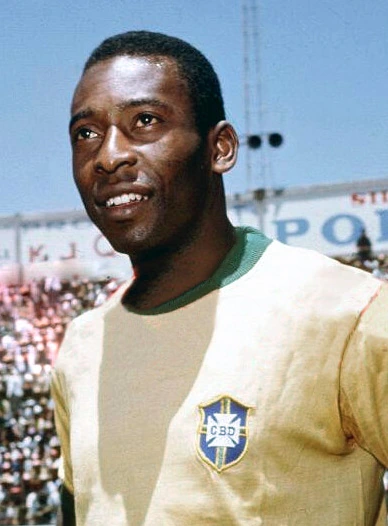
Pele Soccer Player Net Worth: What It Includes and How to Verify
Pelé net worth breakdown: career earnings, endorsements, media, business income, and steps to verify credible estimates.

Bologna FC Net Worth: Club Value, Debt, Revenue Explained
Bologna FC net worth explained: club value, revenue, debt, and how to verify official figures vs estimates.

Sevilla FC Net Worth: How to Estimate Club Valuation
Learn how to estimate Sevilla FC valuation and financial position using source-based revenue, costs, debt, assets, and c