
Pelé's net worth at the time of his death in December 2022 was estimated at approximately $100 million, though credible published figures range from $80 million to $115 million depending on the source and methodology. If you've seen numbers anywhere from $50 million to $200 million floating around the internet, that range reflects real differences in how sites value assets, handle estate complexity, and whether they're working from documented evidence or just repeating each other. Here's what the data actually supports, and how to tell the difference.
Pele Soccer Player Net Worth: What It Includes and How to Verify

Marcus Rendell
2 Apr 2026
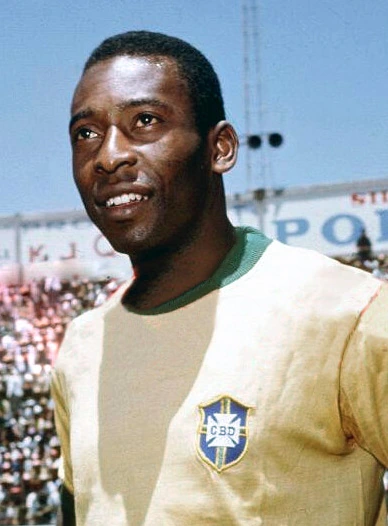
What 'Pelé net worth' actually means (and why the numbers vary so much)
Net worth is a balance-sheet concept: total assets minus total liabilities. That sounds simple, but for a historic figure like Pelé, the calculation involves valuing real estate, business stakes, royalty and licensing income streams, memorabilia, intellectual property, and personal assets, some of which are private and not publicly disclosed. Forbes, for example, uses revenue or profit multiples of comparable public companies to value private business interests, then applies a liquidity discount to account for the fact that private stakes can't be sold instantly at full market value. Their methodology explicitly describes net worth estimates as 'at least' figures, meaning they're deliberately conservative floors, not ceilings.
That methodological humility matters a lot when you're looking at a retired legend who earned across multiple decades, currencies, and countries. A contract signed in Brazilian cruzeiros in 1958 doesn't translate cleanly to 2026 dollars. Estate valuations, inheritance arrangements, and the market value of naming rights and likeness deals add further complexity. When different sites show wildly different Pelé net worth figures, it usually means they're using different asset assumptions, not that one of them secretly knows something the others don't.
Pelé's career earnings, club by club

Pelé's playing career spanned roughly from 1956 to 1977. His main club was Santos FC in Brazil, where he played from 1956 to 1974. By the standards of global football at the time, Santos paid him well, but Brazilian domestic football wages in the late 1950s through early 1970s were modest by today's comparisons. Estimates put his total Santos salary earnings across that period at somewhere between $5 million and $10 million in inflation-adjusted terms, though documented contract figures are not fully public.
His most lucrative playing contract came at the end of his career. In 1975, he signed with the New York Cosmos of the North American Soccer League (NASL) for a reported $4. 5 million over three years, a landmark deal at the time. ESPN also reports that on June 10, 1975, the New York Cosmos announced Pelé joining the club and that he signed a three-year contract worth $2.
8 million, making him the highest-paid athlete in the world at the time a reported $4. 5 million over three years.
This was a heavily publicized, commercially structured arrangement designed partly to grow soccer in the United States, and it included provisions beyond base salary. He retired from the Cosmos in 1977 after helping the club win the 1977 NASL Soccer Bowl. That three-year Cosmos deal represents the most reliably documented single playing contract in his career.
It's also worth noting that Pelé represented Brazil internationally 92 times between 1957 and 1971, winning three FIFA World Cups (1958, 1962, 1970). International appearance fees were minimal by modern standards, so those caps contributed little to his direct financial picture, though they were foundational to his global commercial value.
| Phase | Club/Employer | Approximate Period | Estimated Earnings (inflation-adjusted) |
|---|---|---|---|
| Domestic career | Santos FC (Brazil) | 1956–1974 | $5M–$10M |
| NASL peak contract | New York Cosmos (USA) | 1975–1977 | ~$4.5M (documented) |
| International caps | Brazil national team | 1957–1971 | Minimal (appearance fees) |
Where the real money came from: endorsements, media, and business
Like most legendary athletes, Pelé's peak earning years in a financial sense came after his playing career ended. Endorsements and licensing deals became his primary income engine from the late 1970s onward, and some of those arrangements ran for decades. His long-term relationship with Pepsi is one of the most documented, including the famous 1998 World Cup ad campaign. He also had sponsorship ties with MasterCard, Volkswagen (for a period), and various Brazilian brands.
Pelé's likeness, name, and the number 10 shirt are heavily commercialized intellectual property. Licensing deals for his image in video games, trading cards, and merchandise have generated royalty-style income that continued well into his later years and now flows through his estate. His involvement with EA Sports FIFA titles, for instance, was a recurring commercial arrangement. VideoGamesChronicle reports that EA has extended a footballer player likeness deal and frames it around licensing and potential naming changes tied to its football franchise EA Sports FIFA titles. These kinds of passive income streams are notoriously difficult to value precisely from the outside because the contract terms are private.
On the media side, Pelé authored or co-authored multiple books, produced a documentary (the Netflix documentary 'Pelé' released in 2021), and made countless paid appearances and television cameos over the decades. He also held an official ambassadorial role with FIFA and various Brazilian government-connected sports bodies at different times, though the compensation for such roles varies widely and isn't always publicly disclosed.
Business ventures are a murkier part of the picture. Pelé had a number of Brazilian business interests over the years, including a reported stake in a coffee business and various real estate holdings in Brazil. Some reports suggest financial difficulties at certain points in his later life, including legal disputes, which complicates any clean estimate of his business asset base.
How to estimate net worth for a historic player: the methodology

When I work through a net worth estimate for a retired icon like Pelé, I'm essentially trying to reconstruct a balance sheet from incomplete public information. If you are researching Bruno’s goalkeeper net worth specifically, the same approach matters: focus on documented earnings and clearly separate lifetime wealth from later endorsements and licensing. The credible approach is to start with what's documented, acknowledge what's estimated, and be explicit about the gaps. Here's how that breaks down practically.
- Start with documented contracts: The New York Cosmos deal ($4.5M over three years) is the most reliable single data point. Published reports from the time and multiple retrospective sources corroborate it.
- Apply inflation adjustment carefully: Contracts from the 1960s and 1970s need to be expressed in today's dollars to be meaningful, but the conversion is approximate.
- Value endorsement income conservatively: Long-term deals with Pepsi and others are mentioned in credible sports business reporting, but exact figures are private. Range estimates based on comparable athlete endorsement deals of that era are the honest approach.
- Assess real estate and business stakes: Pelé's Brazilian property and business interests are partially referenced in press reporting and legal coverage, but not fully disclosed. Use reported figures where available, acknowledge uncertainty elsewhere.
- Subtract liabilities: Any reliable net worth estimate must account for reported debts, legal settlements, and outstanding financial obligations, some of which surfaced in Brazilian press coverage during his later years.
- Cross-reference estate documentation: Post-death, estate proceedings can reveal asset values not previously public. Some information has emerged from Pelé's estate, but a full accounting is not publicly available.
The honest limitation here is that for private individuals, even very famous ones, net worth figures from third-party sites are always estimates. They are not audited balance sheets. For a player of Pelé's era and geographic base, the documentation trail is thinner than it would be for a modern Premier League star whose contracts and endorsement deals are often reported in real time by specialist sports business journalists.
If you want to check whether a specific Pelé net worth figure is credible, look for these signals: does the source distinguish between documented income and estimated asset values? Does it cite specific contracts or endorsement deals by name? Does it acknowledge a range rather than claiming false precision with a single round number? Sites that state a figure like '$100 million' without any methodology or source are probably just aggregating other estimates, not conducting original research. Net worth figures for soccer players broadly face this same credibility challenge, and the best practice is always to follow the evidence trail back to primary sources.
The credible range for Pelé's net worth, and what to trust
Based on the available documented evidence, the most defensible range for Pelé's net worth at the time of his death in December 2022 is $80 million to $115 million. The $100 million figure cited by Celebrity Net Worth and repeated by many outlets sits comfortably within that range and is broadly consistent with the income streams we can account for: a long Santos career, the Cosmos contract, decades of major endorsements, media and licensing income, and business interests, all offset by reported financial difficulties and liabilities in his later years.
Figures above $150 million should be treated with skepticism unless a source can point to specific asset documentation. Similarly, figures below $50 million probably undercount his licensing and endorsement legacy. The estate of Pelé continues to generate income through licensing and image rights, meaning the total wealth associated with the 'Pelé brand' is still active, though that's a different number from what he personally held at death.
One useful cross-check: Forbes-style methodology (as described in their published 400 methodology notes) treats estimates as conservative floors. If a Forbes-adjacent source applied that logic to Pelé and came up with $100 million, that number is probably a floor, not a midpoint. That's consistent with a range of $80M to $115M being reasonable rather than a ceiling.
How Pelé compares to other football legends and current players

Context matters a lot when interpreting Pelé's wealth. He earned in an era when footballer wages were a fraction of what they are today, and the global commercial infrastructure for athlete endorsements was only beginning to develop during his peak years. A direct comparison with modern players is genuinely misleading without that framing.
Among retired legends, Pelé's $80M–$115M range is broadly comparable to contemporaries like Johan Cruyff (estimated at around $40M–$50M at death in 2016, lower in part due to different endorsement markets) and Franz Beckenbauer (estimated around $80M–$120M at death in 2024, boosted by his management and business career in Germany). Diego Maradona, despite his fame, reportedly died with far less documented wealth (under $1M in verified estate assets) due to legal and financial difficulties, which is a stark reminder that career earnings and net worth are very different things.
Modern active players operate on a completely different financial scale. The highest net worth soccer player today is estimated in the $500M to $1.2B range depending on the source and the player, which reflects the explosion in transfer fees, broadcast rights, and global sponsorship markets since the mid-2000s. Pelé in his prime was arguably the most famous athlete in the world, but the commercial structures to monetize that fame simply didn't exist at the scale they do now.
Among the richest soccer players by net worth, Pelé would rank well outside the top 10 if compared directly to current active stars, but that comparison is essentially unfair. In the context of players from his era, he almost certainly accumulated more wealth than any other footballer of the 1960s and 1970s, largely because of his post-career commercial longevity.
For a sense of scale among players active today, consider that even mid-tier players with strong brand profiles can accumulate significant wealth quickly. Bruno Fernandes' net worth, for example, reflects how modern contracts and endorsements compound rapidly for players at top European clubs, something that simply wasn't available to Pelé in the Santos and early NASL era. Even in specialized positions, you see this dynamic play out: goalkeeper wealth profiles now include significant commercial income streams that would have been unthinkable for keepers in the 1960s. Even though this guide focuses on Pelé, goalkeeper net worth is another position-specific angle that can change how these estimates are built and explained.
It's also worth noting that athlete wealth comparisons extend across sports. When researchers and fans explore how soccer wealth stacks up against other athletic disciplines, they sometimes find useful context by looking at adjacent domains. MotoGP riders' net worth figures, for instance, illustrate how different sports generate different commercial leverage for their stars, and how endorsement markets in niche versus global sports produce very different wealth outcomes.
Where to look if you want to dig deeper
If you're trying to verify or build on the figures above, here are the most useful source types to prioritize. Sports business publications (Sports Illustrated, ESPN's business coverage, The Athletic) occasionally report on documented contract values and endorsement deals with named sources. Brazilian financial and sports press covered Pelé's business affairs and legal disputes over the years and can fill in context that English-language sites miss. Estate reporting, when it becomes public, is the closest thing to a verified balance sheet you'll get for a deceased public figure. And Forbes-methodology sites, while imperfect, at least provide a structured conservative estimate rather than an aspirational number.
What to avoid: sites that show a single clean round number with no methodology, aggregator pages that just repeat celebrity net worth figures without attribution, and any source that doesn't distinguish between what Pelé earned during his lifetime and what his estate or licensing brand is worth today. Those are different numbers, and conflating them is one of the most common reasons published estimates diverge so wildly.
The bottom line is that $100 million is a reasonable and defensible central estimate for Pelé's net worth, with a credible range of $80M to $115M. That figure is built on a Santos career worth tens of millions in adjusted terms, the landmark Cosmos contract, decades of major global endorsements, and licensing income that outlasted his playing days by nearly 50 years. It's lower than some sites claim and higher than others, but it's the number that actually holds up when you follow the evidence.
FAQ
Is Pelé’s $100 million figure meant to represent what he personally owned at death, or the value of the Pelé brand and licensing income?
Most published “net worth” numbers are trying to approximate what the estate held at death (personal assets minus liabilities). But some pages blur this by mixing lifetime earnings with ongoing licensing and image-right value. A quick check is whether the source explicitly separates “wealth at death” from “value of brand/royalties going forward,” because those are different measurements.
Why do some sites claim numbers far below $80 million or above $115 million?
Low figures often ignore or heavily discount long-tail income like image and number-10 shirt licensing, plus media and book-related cash flows. High figures usually assume asset values without showing documentation, or treat expected future royalty streams like a lump-sum asset. If a source cannot name specific contracts, holdings, or a method for converting royalties to present value, the number is likely speculative.
If a website provides a single exact number (for example, $100M), how can I tell whether it is evidence-based or just copied?
Look for a described methodology and attribution to primary inputs (named deals, publicly reported contract amounts, or estimated categories with explanation). If the page provides no evidence trail, no range, and only references other “net worth” sites, it is often an aggregator. The most credible presentations usually state that the figure is an estimate and explain what is and is not included.
Does the fact that Pelé’s biggest contract was the Cosmos deal mean his net worth should track roughly with the $4.5 million value?
Not directly. The Cosmos contract is important because it is one of the clearest playing-era anchors, but net worth also reflects what happened afterward, especially endorsements, licensing, media work, and estate performance. Also, the contract amount was spread across years and currencies, so net worth depends on savings, reinvestment, taxes, and later liabilities.
How should I compare Pelé’s net worth with modern top players’ net worth without misleading myself?
You should avoid a straight conversion across eras. Modern net worth estimates often include much larger transfer-related wealth, huge broadcast-driven compensation, and today’s endorsement scale, plus clearer contract documentation. Pelé’s era had fewer monetization channels and less transparent deal reporting, so a fair comparison requires focusing on the time-adjusted earning environment and the role of post-career commercial longevity.
What’s the easiest “sanity check” I can do when I see a Pelé net worth estimate?
Check whether the estimate acknowledges multiple categories discussed in credible reports: playing contracts (Santos and Cosmos), decades of endorsements, ongoing image-right licensing via the estate, and potential offsetting liabilities from later-life business or legal issues. If a number includes only career salary or only endorsements and ignores the licensing duration, it tends to be incomplete.
Does Pelé’s estate or licensing brand have the same value as what he personally had when he died?
No. The estate can continue generating royalties from image and IP deals long after death, so the “value associated with the Pelé brand” can be larger than the personal net worth at death. Credible numbers should clarify whether they are quoting estate assets, lifetime personal holdings, or a broader valuation of the brand’s future income.
How do I treat figures above $150 million or below $50 million when I’m researching?
Treat very high figures (for example, above $150M) as unlikely unless the source provides asset-level documentation or a transparent valuation model. Treat very low figures (below $50M) as undercounting unless it explains why licensing, media, and decades of endorsements were excluded or discounted. The most useful estimates cluster into a documented range rather than extreme points.
Are currency and inflation adjustments a major reason for differences in estimates?
They can contribute, especially for Santos-era earnings and how sites translate old contracts into modern dollars. But large discrepancies usually come more from assumptions about private assets and royalty licensing, not just inflation. A good methodology will state how it handles historical currency conversion and then separately explain asset valuation and discounts.
Next Articles
Bologna FC Net Worth: Club Value, Debt, Revenue Explained
Bologna FC net worth explained: club value, revenue, debt, and how to verify official figures vs estimates.
Sevilla FC Net Worth: How to Estimate Club Valuation
Learn how to estimate Sevilla FC valuation and financial position using source-based revenue, costs, debt, assets, and c

Napoli FC Net Worth Explained: Valuation, Debt, Owners
Napoli FC net worth breakdown: valuation vs equity, revenue, debt, wages, amortization, owners, and Serie A peer compari